Let’s be honest – learning to code starts exciting, but tutorial overload hits fast. You go from YouTube playlists to GitHub repos and suddenly feel stuck wondering what to do next.
Am I learning the right stuff? Am I even ready for a real job? How long is this going to take?
If that sounds familiar, you are not alone. In 2026, more developers are asking a real question:
Should I keep self-learning, or invest in a structured full stack program that actually gets me work-ready?
In this post, we will explore why developers are leaning toward structured programs and what people prefer in a world where time, clarity and job readiness matter more than ever.
The Reality of Learning
Before we compare approaches, let’s acknowledge something real:
Self-learning requires discipline and patience.
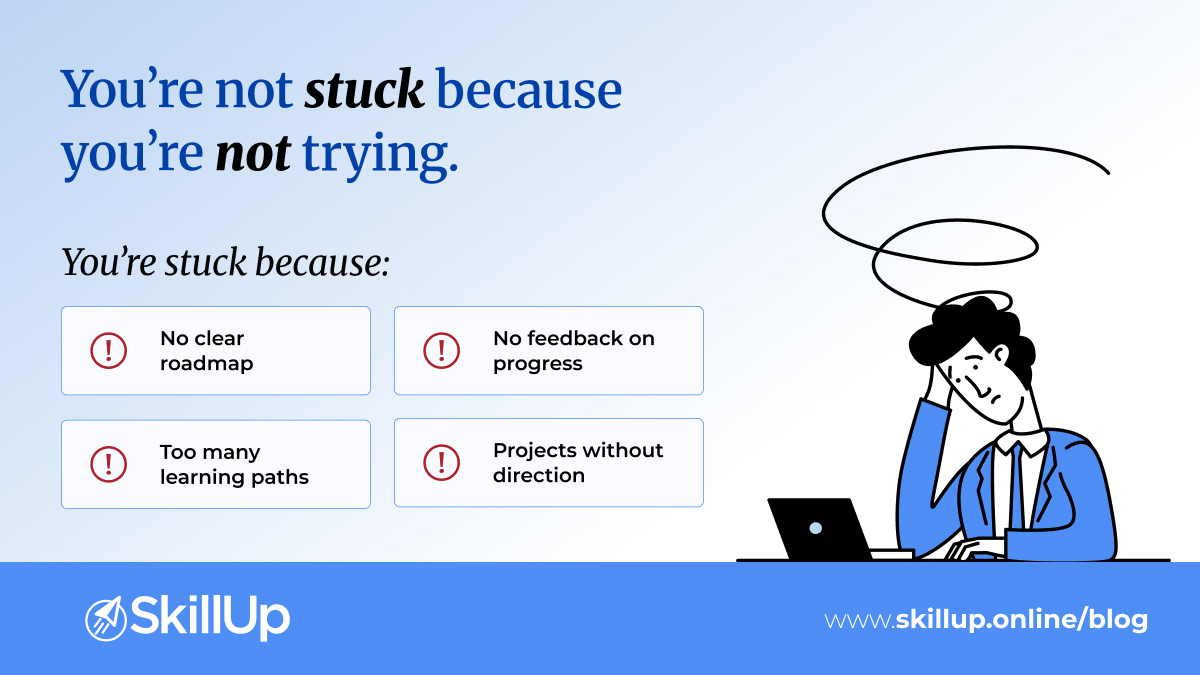
You pick a playlist, then another, then docs, then a project, then a job spec, and then a totally different trajectory. There is no roadmap. No clear steps.
That’s not always the most effective way people learn, especially without structure or real-world application. Structured programs exist because they solve exactly this problem.
What Structured Programs Deliver and Why Developers Like Them?
A structured full stack program provides-
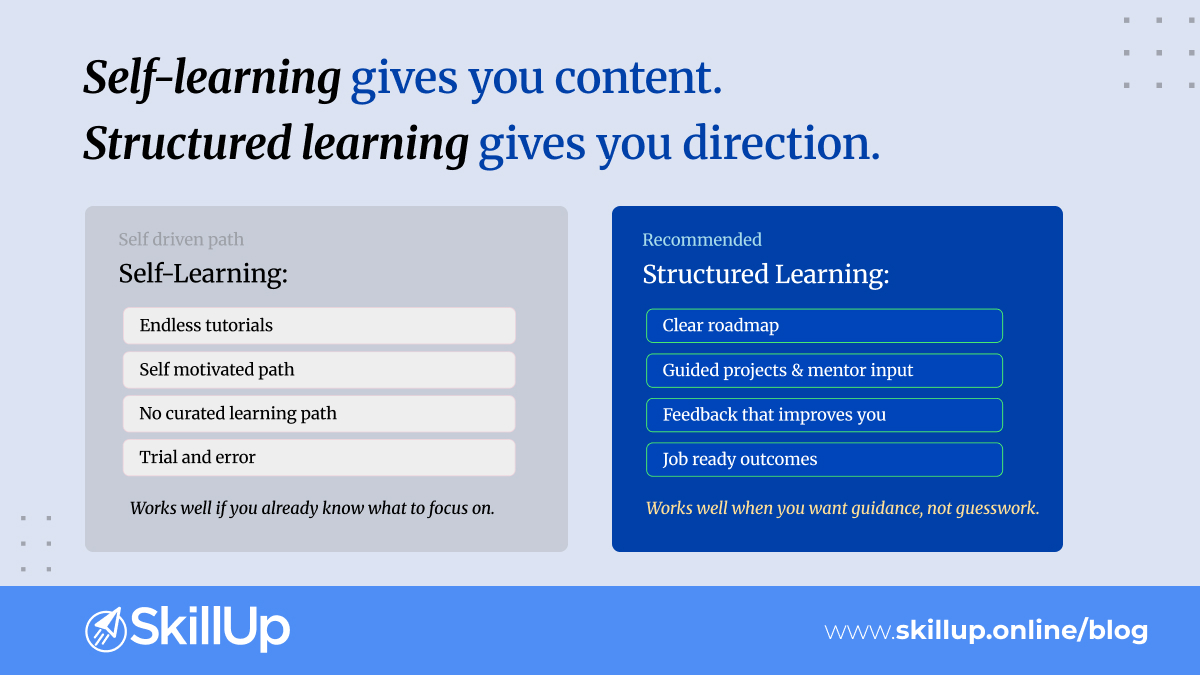
- A clear roadmap
- Hands-on and relevant projects that you can show off
- Mentor support
- Real world use cases
- Timelines that align with industry expectations
- A community of peers
Contrast that with self-study-
- Endless searching to get relevant quality content
- No accountability
- Projects that feel like exercises but not products
- No feedback loop
- No resume-ready portfolio
The difference is that the structured program equals clarity and speed. You move forward with purpose instead of wandering.
How the Data Backs This Shift?
Let’s bring in some solid data to show what is really happening in the industry.
Structured Program vs Self-Study Outcomes
| Metric | Structured Programs | Self-Study |
|---|---|---|
| Job Placement Rate | 80–90% within 6 months after completion | Lower and inconsistent |
| Project Portfolio | Multiple full projects ready for hiring review | Often incomplete or isolated |
| Time to Job-Ready | 3–9 months (depending on the intensity) | Highly variable (6–24 months) |
| Mentor Support | Available and structured | Minimal or none |
| Learning Roadmap | Prescribed and progressive | Fragmented and user-defined |
This clearly shows that structured programs deliver faster clarity, mentorship and job readiness, all things of self-study rarely guarantee.
Developers Don’t Hate Self-Study – They Hate Uncertainty
If you ask developers why self-learning feels difficult, the gap is usually in execution, not effort. Here’s what actually holds people back:
-
Learning without a roadmap
Many learners jump between topics (Python → AI → Web Dev) without mastering one path, leading to shallow understanding.
-
Passive consumption vs active building
Watching tutorials feels productive, but real skill comes from building projects independently, something most learners delay.
-
The “copy-paste trap”
Following along with code works short-term, but without writing logic from scratch, retention drops significantly.
-
No feedback loop
Without code reviews or mentorship, mistakes go unnoticed and habits don’t improve.
-
Portfolio gap
Recruiters look for 2-3 solid, real-world projects, but many learners only have incomplete tutorial-based work.
What actually works better:
- Build one project per skill (not per tutorial)
- Spend 60-70% time coding, not watching
- Get feedback early (peers, mentors, communities)
- Focus on job-relevant stacks instead of trending tools
This is exactly where structured programmes add value, they turn scattered effort into a focused, outcome-driven learning journey.
Breaking Down What Each Approach Teaches
Let us look at what you actually learn from both methods.
Self Learning
Pros-
- Free or low cost
- Learn at your own pace
- Pick your own tools and stacks
Cons-
- No accountability
- Little to no feedback
- Projects often remain inconsistent
- Harder to translate into job readiness
Structured Full Stack Programs
Pros-
- Curriculum mapped to industry demand
- Hands-on projects with real scope
- Mentor and peer reviews
- Career support and interview prep
- Pathway toward full stack competence
Cons-
- Investment required
- Time-boxed schedule
Structured programs double as learning and career launch systems, whereas self-learning is just content consumption.
Developer Voices: What They Actually Prefer?
- Many developers start with self-learning but switch to structured programs
- Developers say structured programs help them avoid overwhelm
- Job seekers find that structured certification signals readiness to employers
That aligns with industry insights as hiring managers look for project experience, portfolio depth and disciplined training, not just hours spent watching videos.
Structured Programs Build Real Projects, Not Theory
One of the biggest differentiators developers talk about is this:
I learned more from building a full project with a deadline and review than from watching 200 videos. That is because structured programs include:
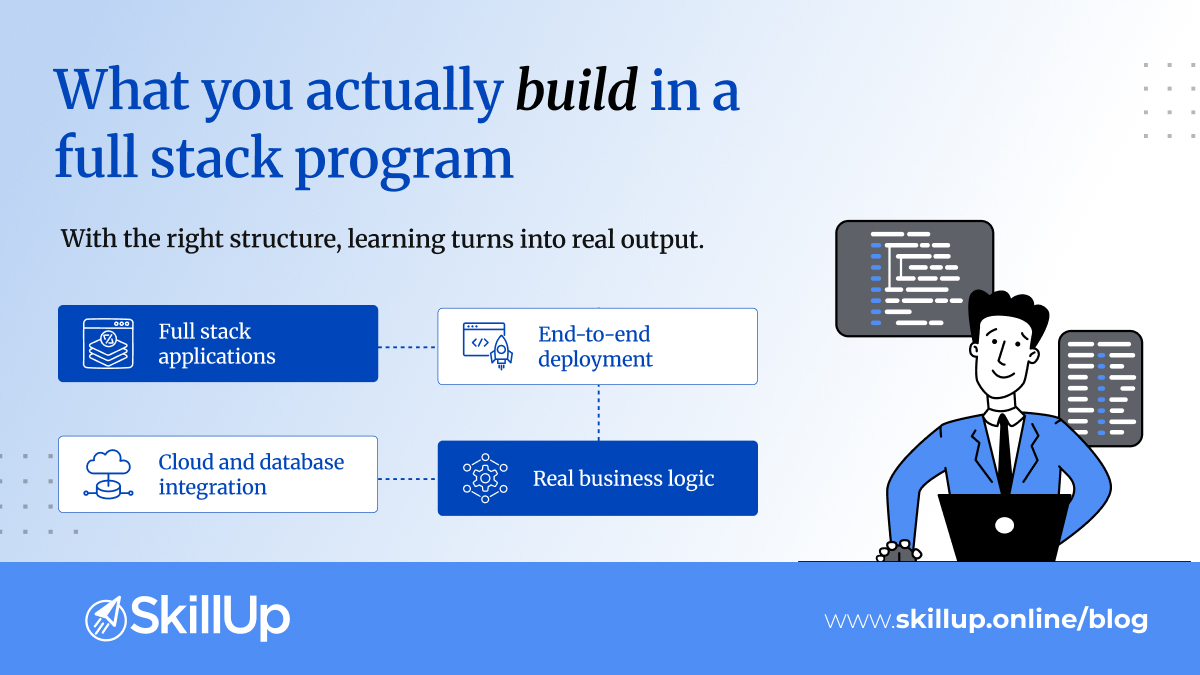
- Full stack web apps
- End-to-end deployment
- Authentication and security modules
- Cloud integration
- Database joins and migrations
- Real business logic
These experiences are industry currency, not just learning checkpoints.
Structured Learning = Faster, Smarter Job Readiness
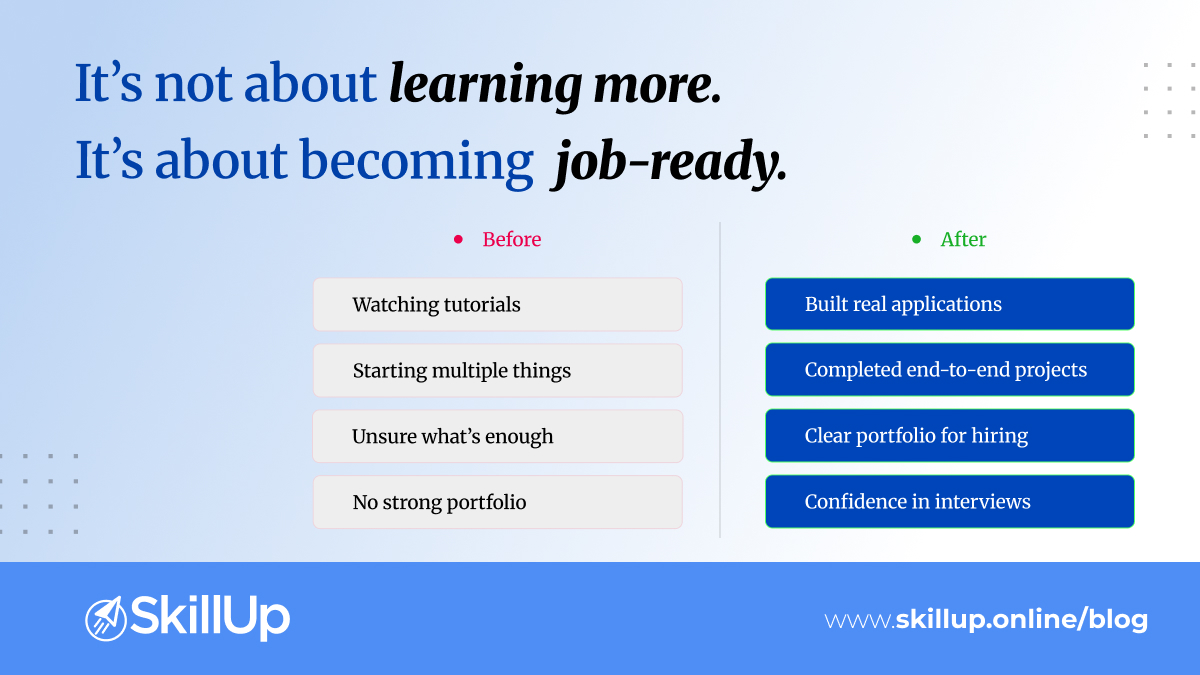
Here’s the reality, most developers don’t struggle with learning, they struggle with direction. Self-learning often turns into a loop of starting, stopping, and second-guessing progress.
What actually slows things down?
- Jumping between topics without mastering one path
- Spending months on basics but delaying real project work
- Building projects without knowing industry expectations
- No feedback, so mistakes keep repeating
Structured programs fix this by design:
- Clear roadmap: You always know what to learn next
- Real projects: Build work that actually reflects job roles
- Mentor feedback: Improve faster with guided input
- Career prep: Portfolios, interviews, and job readiness built in
The difference isn’t just speed – it’s clarity, confidence, and outcomes that actually move your career forward.
But What About Cost? Is Structured Worth It?
When you judge cost solely on tuition, you are missing the bigger picture. The real ROI includes-
- Faster time to job readiness
- Higher confidence in technical decisions
- Better interview success
- Portfolio projects employers want
- Structured mentor support
- Career guidance and networking
It is not paying for videos, it is paying for outcome-oriented learning. Structured programs teach concepts and adaptability. Most developers find this to be a justified investment and often much sooner than they expect.
AI and Full Stack: What Actually Changes for Developers
Here’s the real shift, AI isn’t replacing developers, it’s changing how you work every day. Instead of writing everything from scratch, developers are now:
- Using AI tools to speed up code generation, but still needing to review, fix, and optimise it
- Debugging AI-generated code that doesn’t always follow best practices
- Integrating AI APIs into real applications (think chat features, recommendations, automation)
- Working with smarter testing and deployment workflows that require human decision-making
Knowing how to use a tool isn’t the same as knowing when and why to use it. That’s where structured learning becomes practical.
It puts you in scenarios where AI is part of the workflow – building, testing, and deploying real applications, so you are not just experimenting, you are actually learning how it fits into real systems.
Where Developers Actually Prefer to Invest Time in 2026?
Let’s be real, developers in 2026 aren’t chasing more content, they are chasing clarity. The shift is obvious: it’s no longer about how much you learn, but how effectively you apply it.
Here’s what actually matters now:
- Clear learning paths that lead to real job roles (not random tutorials)
- Building complete, usable projects, not half-finished experiments
- Getting feedback that helps you improve, not just validation
- Developing skills that translate into confidence during interviews
The vibe has changed. It’s less “learn everything” and more “learn what works.”
That’s why structured, outcome-focused learning is getting more attention as it aligns effort with results. Skillup Online’s TechMaster Certificate Program in Full Stack Application Engineering is a part of this shift, focusing on practical projects, guided learning, and career readiness without overcomplicating the process.
Because at the end of the day, it’s simple: developers don’t just want to learn, they want to move forward.
Final Thoughts: Choose Clarity Over Chaos
At the end of the day, the shift isn’t about choosing what’s easier, it’s about choosing what actually moves you forward as a learner.
Most developers hit the same wall at some point: you have learned the basics, but building real applications feels messy, interviews feel uncertain, and progress starts to plateau. That’s where the difference shows.
What learners actually need at this stage:
- A clear transition from learning concepts to building real-world applications
- Guidance on turning projects into a strong, job-ready portfolio
- Feedback that helps fix gaps before they become habits
- Support in navigating interviews with actual confidence
Structured programmes work because they solve these exact problems, not in theory, but in practice.
The focus now is simple: build better, not just more. SkillUp Online fits into this journey by helping you stay consistent, focused, and closer to real outcomes without the guesswork.

SkillUp Online