Your Netflix queue seems to know what you want to watch before you do. Your email quietly moves spam out of sight. Some hiring platforms can sort through resumes before a recruiter opens the first one. These tools feel normal now, but they all raise the same question: how does AI work in the background?
A recent McKinsey AI survey found that 65% of organizations now use AI in at least one part of their business. Even so, many professionals rely on AI tools every day without really knowing what is happening behind the screen. That knowledge gap matters more than it used to because AI is becoming part of how modern work gets done.
This article breaks down the basics of AI in a way that makes sense without turning it into a technical lecture. If you have wanted a clearer understanding of AI, this is a good place to start.
What Is Artificial Intelligence?
Artificial intelligence is software that can perform tasks that usually require human judgment. That can include recognizing patterns, understanding language, making recommendations, or generating responses based on data.
The easiest way to think about it is this: traditional software follows instructions, while AI learns from information.
That difference is important. A normal program does exactly what it is told. AI systems can improve over time as they process more data. So, what is AI and how does it work? Understanding its nuances helps you to grasp how AI can be applied in real-world professional settings and everyday work.
Types of AI You Should Know
When people talk about the types of AI, they usually mean two broad categories.
The first is narrow AI. This is the kind businesses use today. It handles a specific task, such as recommending products, spotting fraud, or answering customer questions. Nearly every AI system in daily use falls into this category.
The second is general AI. This refers to a system that could think and reason more like a human across different tasks. It gets discussed often, but it is still theoretical.
For most professionals, narrow AI is what matters because it is already changing how teams work.
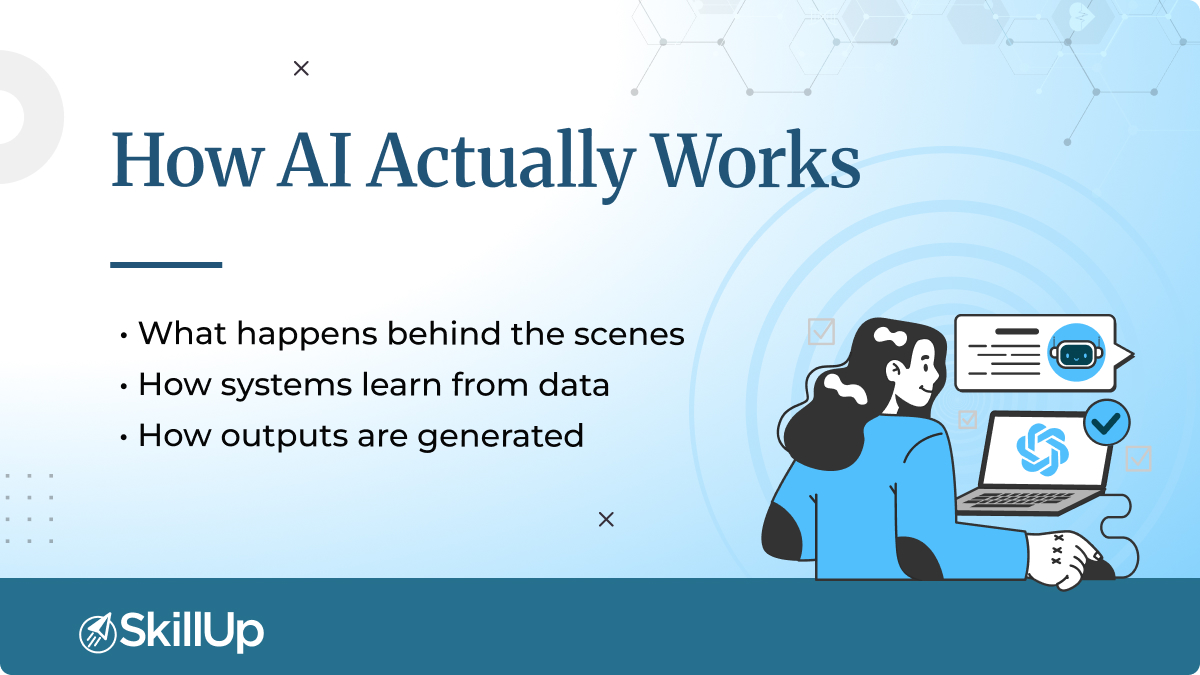
How Does AI Work? A Simple Breakdown
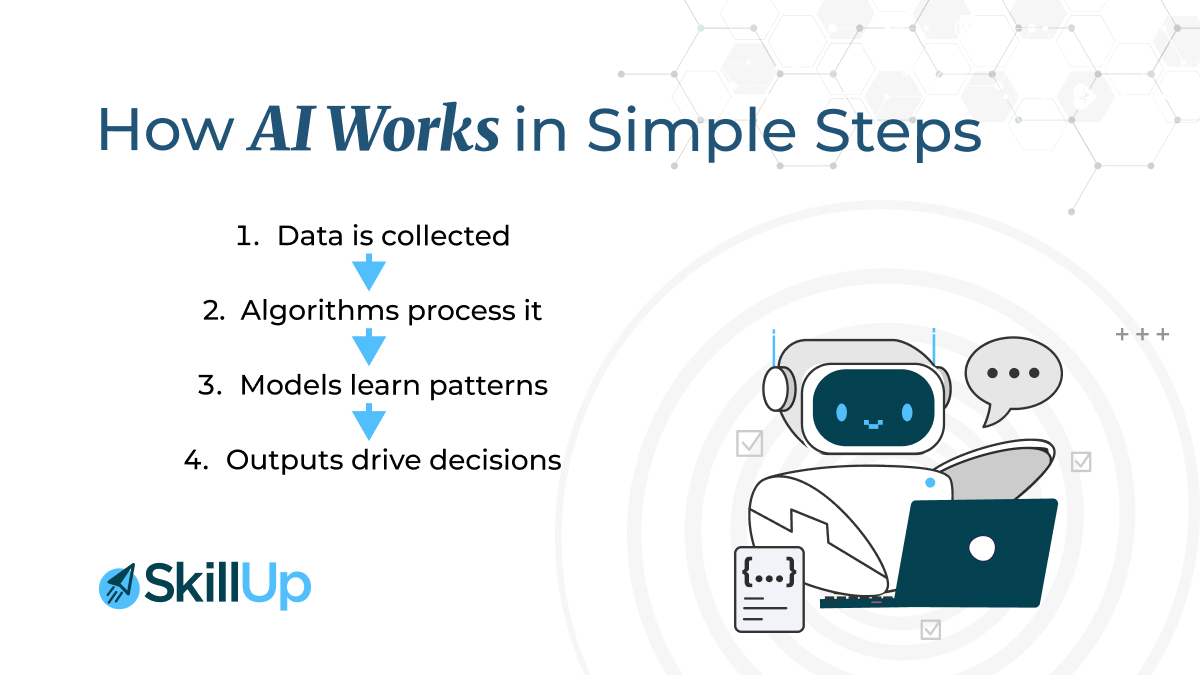
To understand how AI works, it helps to look at the process step by step.
-
Data Comes First
Every AI system starts with data. Without it, there is nothing to learn from. That data might come from spreadsheets, customer records, emails, images, video, or purchase history. Some of it may be neatly organized, while some of it may be messy. Either way, AI looks through that information to find patterns that humans might miss.
A fraud system, for example, studies millions of transactions to learn what normal spending looks like. Once it understands that pattern, unusual activity becomes easier to spot.
-
Algorithms Do the Thinking
After the data comes the algorithm. An algorithm is the set of rules that tells the system how to interpret the information. It helps AI decide what matters and what does not.
Some algorithms are designed to classify information. Others are built to predict outcomes. The algorithm is what turns raw information into something useful.
-
Models Learn from Experience
Once an algorithm has processed enough data, it creates a model. A model is essentially the trained version of the system. It uses what it has learned to make future decisions.
This is often the easiest way to explain the obvious question, “How does AI work for beginners?”, because it is similar to how people learn. The system improves through repetition. The more relevant data it sees, the better it usually becomes.
-
The Output Becomes Action
After that, AI produces an output. That output could be a product recommendation, a flagged payment, a chatbot reply, or a forecast. What users see is only the final step. Most of the work happens long before that result appears on screen.
Technologies That Make AI Possible
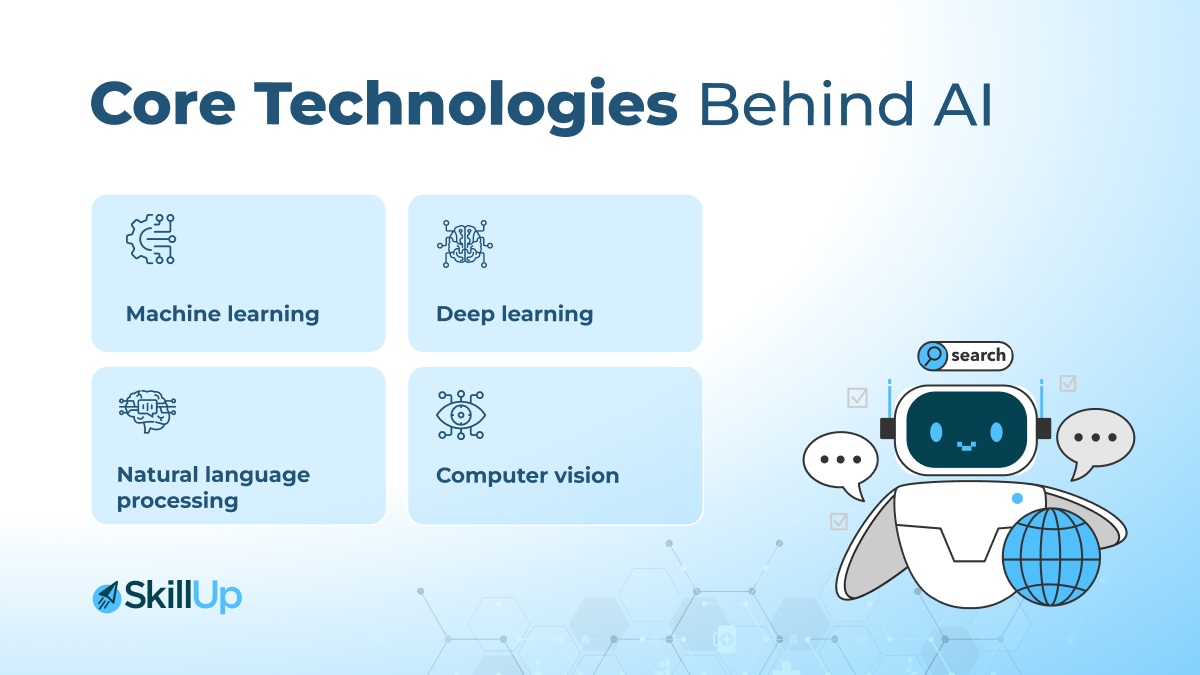
Modern artificial intelligence depends on several technologies working together behind the scenes, allowing it to handle complex tasks and support a wide range of industries in more practical ways.
-
Machine Learning
Machine learning allows systems to improve without needing a programmer to rewrite instructions every time something changes. Some systems learn from labeled examples, others identify patterns on their own, and some improve through trial and error. That flexibility is what makes machine learning useful across industries.
-
Deep Learning
It employs multiple neural networks to interpret intricate data patterns, somewhat analogously to the brain’s pattern recognition mechanism. This is another aspect when one thinks of how does generative AI work, as text or image generator tools depend on deep learning to forecast the subsequent content. Deep learning takes that a step further.
-
Natural Language Processing
Natural language processing helps AI understand human language. It is what allows voice assistants, chatbots, and search tools to respond in a way that feels more natural.
-
Computer Vision
Computer vision gives AI the ability to interpret images and video. That is why AI can help detect medical issues in scans, monitor factory equipment, or support autonomous vehicles.
How AI Is Used Across Industries
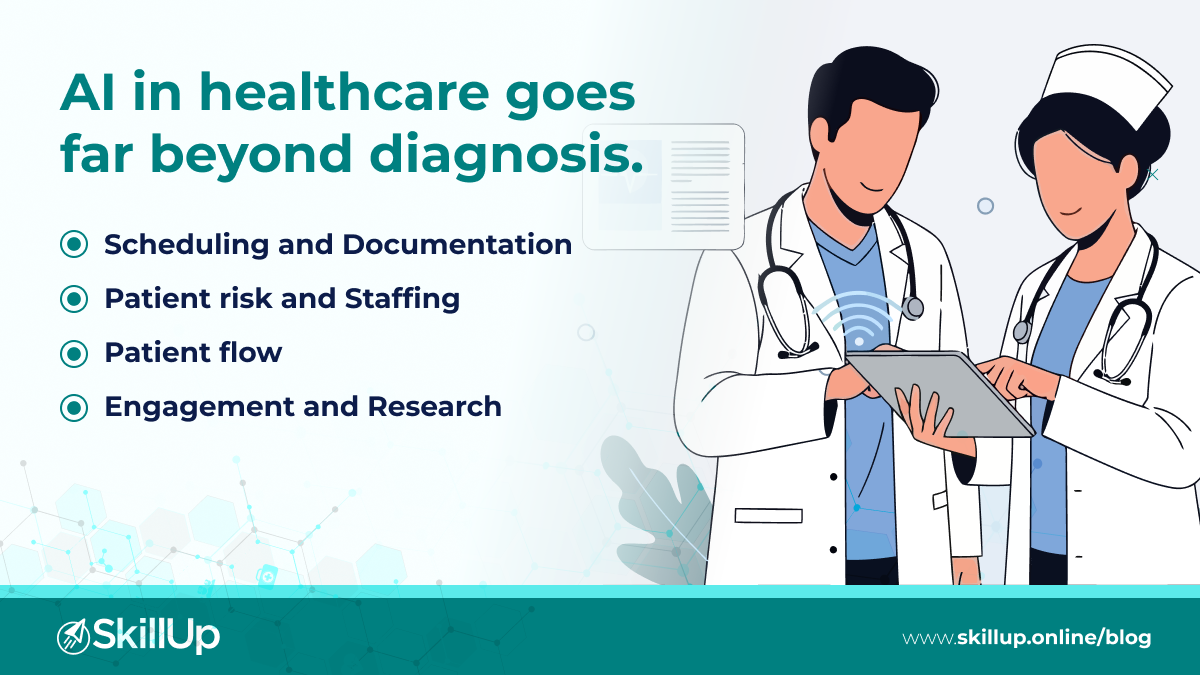
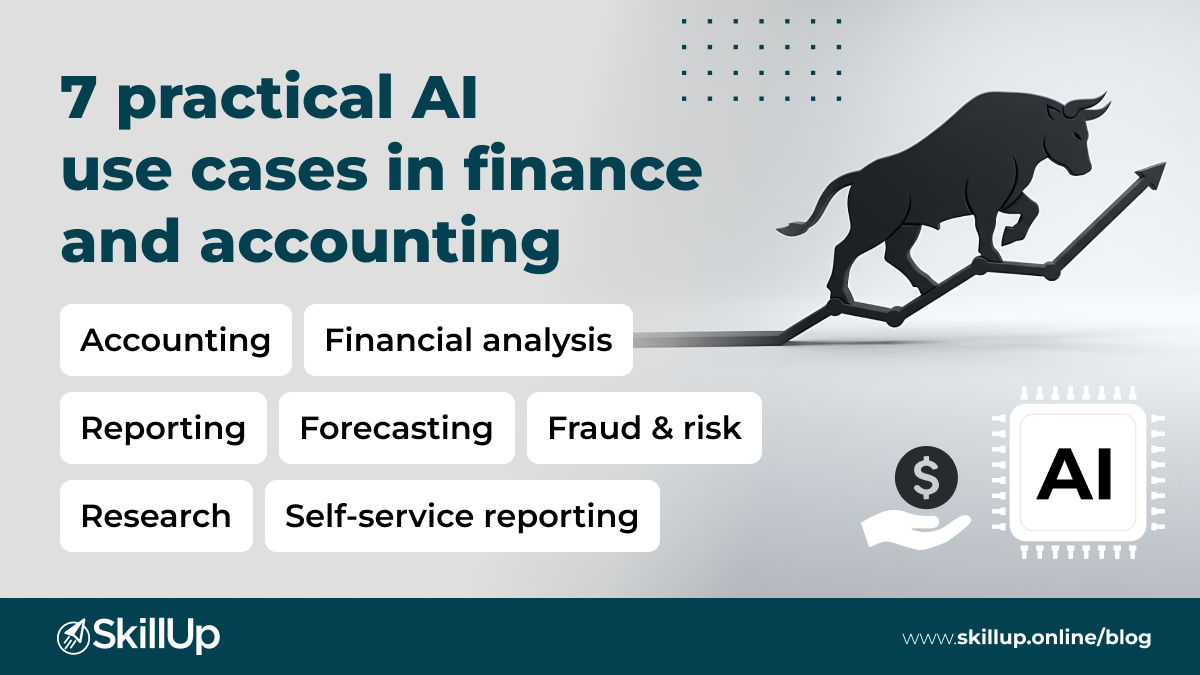
AI is no longer limited to technology companies. Hospitals use it to support earlier diagnosis. Banks use it to detect suspicious activity. Marketing teams use it to personalize customer experiences. Operations teams use it to improve forecasting and reduce waste.
According to PwC, AI could add $15.7 trillion to the global economy over the next decade, largely because of the efficiency it can create in everyday business processes.
Why Professionals Should Understand AI
Professionals who understand AI can ask better questions, make stronger decisions, and work more effectively with technical teams.
This matters, because AI is becoming part of leadership conversations, not just IT discussions.
By understanding how AI actually works, professionals can stay informed instead of simply reacting to change.
Common Misunderstandings About AI
A lot of confusion still surrounds AI; some people think AI will replace every job. In reality, it usually changes work more than it removes it.
Others believe AI thinks like a person. It does not. It recognizes patterns, but it has no true understanding.
Another common belief is that only programmers need to learn AI. In practice, many non-technical professionals now benefit from understanding it.
Challenges to Keep in Mind
Starting your AI journey doesn’t mean you have to dive into deep data science. Usually, it’s more about grasping the basics so you can tell where the tech shines and where it tends to stumble.
For those who prefer a guided route, the TechMaster Certificate Program in AI and ML Engineering offers a solid way to connect theory with actual professional projects. It’s a good fit if you’d rather have a structured roadmap than figure it out entirely on your own. To keep things manageable, many of these programs include flexible payment plans, making the investment a bit more accessible as you build your skillset.
Final Thoughts
AI is becoming part of everyday work whether people feel ready for it or not.
The people who understand how AI works are often in a stronger position to use it well, question it when needed, and make better decisions around it.
You do not need to become an engineer to understand AI. But understanding it can become a real advantage.

SkillUp Online