Becoming a full stack developer while keeping your current job is no longer a far-fetched goal. In fact, for many working professionals in the US, it is the smartest way to enter tech without putting career stability at risk.
With the right learning plan, consistent practice, and a structured approach, you can build real-world full stack skills after work hours and on weekends.
The biggest challenge is not ability, but consistency. Many people start with enthusiasm, jump between random tutorials, and eventually lose momentum. This is why more developers are now choosing structured full stack programs instead of trying to figure everything out alone. A guided path makes the journey more manageable, especially when you are balancing deadlines and personal responsibilities.
This guide explains how to become a full stack developer, even if you are currently employed, and how to build a stable and scalable career in development.
What Does a Full Stack Developer Do?
A full stack developer is responsible for building and managing both the front end and back end of web applications. This includes designing user interfaces, developing server-side logic, and ensuring that applications function smoothly across different platforms.
In most full stack developer roles and responsibilities, professionals work on-
- Developing and maintaining web services
- Contributing to both front-end and back-end development
- Building new product features or APIs
They are also involved in testing applications, identifying issues, and fixing bugs to ensure performance and reliability.
If you’re exploring how to become a full stack developer, the scope continues to expand, as new technologies and frameworks emerge. Professionals in this field are expected to stay updated with modern tools, cloud environments, and evolving development practices. The increasing integration of AI into software development is also changing how applications are built, making it important for developers to understand AI-assisted coding and automation.
The High Demand for Full Stack Developer Careers in the US
The demand for full stack developers continues to grow across industries in the US. Companies are looking for professionals who can handle both front-end and back-end development, making them highly valuable.
Key reasons to consider full stack developer career path
- Strong salary potential across entry and mid-level roles
- Remote and freelance opportunities across global companies
- Ability to switch careers without a formal computer science degree
A full stack developer career path offers flexibility, growth, and long-term relevance in a technology-driven market.
Full Stack Developer Skills You Need to Learn
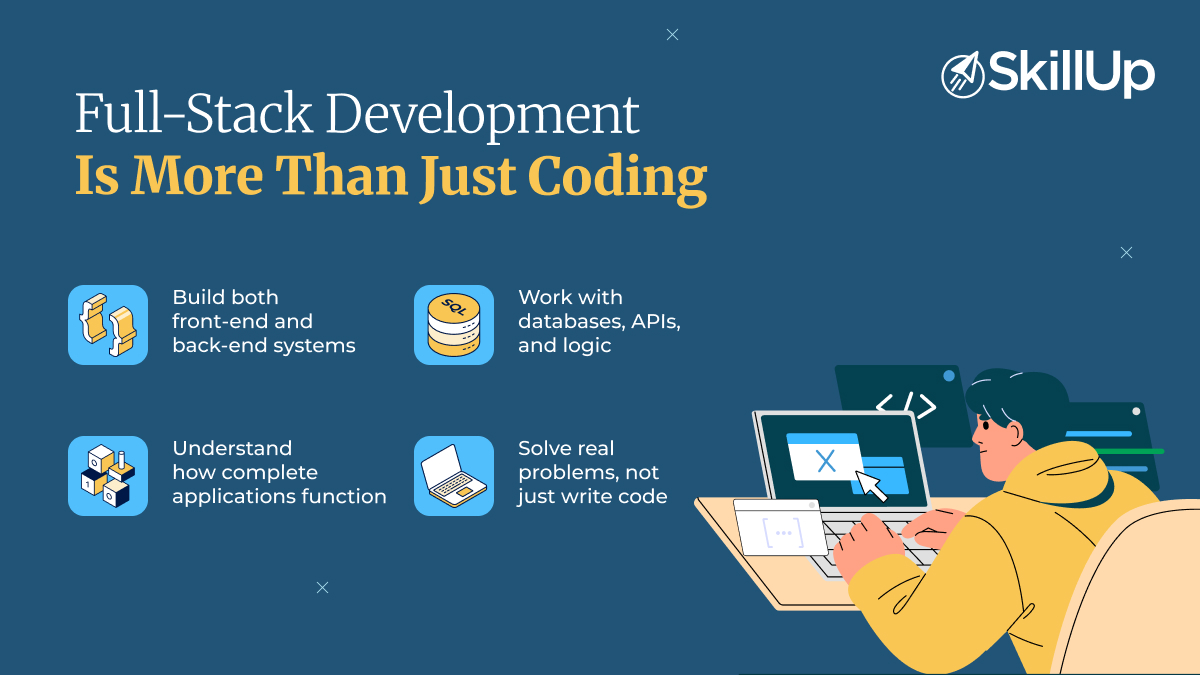
You might find yourself asking, “What skills do I need to become a full stack developer?” Here’s everything you need to know.
A full stack developer needs a clear understanding of how front-end and back-end systems interact, along with the ability to write code that connects applications to servers and databases. Alongside programming languages, essential full stack developer skills include basic web design, web architecture, APIs, databases, version control systems like Git, and command line usage.
Beyond technical expertise, strong problem-solving ability is critical. Developers must interpret requirements, communicate effectively, and understand how different components of an application work together. Knowledge of the best coding practices, including documentation, code reviews, and collaborative development, is also important.
Pursuing this career path is not limited only to graduates in the field. If you want to be a full stack developer without a degree, then you would require great attention to detail, adaptability, and a willingness to continuously learn. As technologies evolve, professionals in this field must stay updated, seek feedback, and refine their skills. A practical, consistent approach to learning and building projects helps develop both technical and professional capabilities over time.
These skills form the foundation of most full stack developer jobs in the current market.
How to Become a Full Stack Developer While Working a Full Time Job
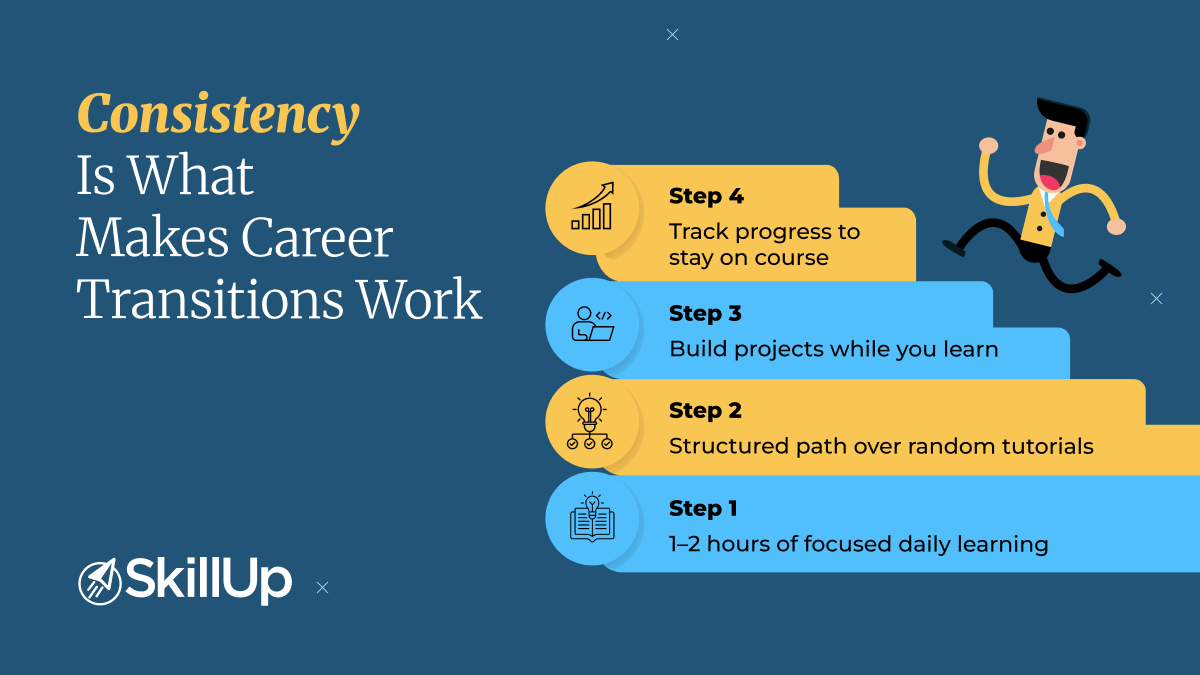
The biggest doubt is, “Can I become a full stack developer while working full time?” due to time management struggles.
Here’s a practical strategy for working professionals to understand how long it takes to become a full stack developer with a job while managing their existing responsibilities.
- Allocate 1-2 hours daily for focused learning
- Follow a structured program instead of random tutorials
- Build projects alongside learning to reinforce concepts
- Track your progress weekly to stay consistent
You do not need to disrupt your income or career stability. With the right approach, you can transition into development while continuing your current job.
Learn Full Stack Development with a Structured Program
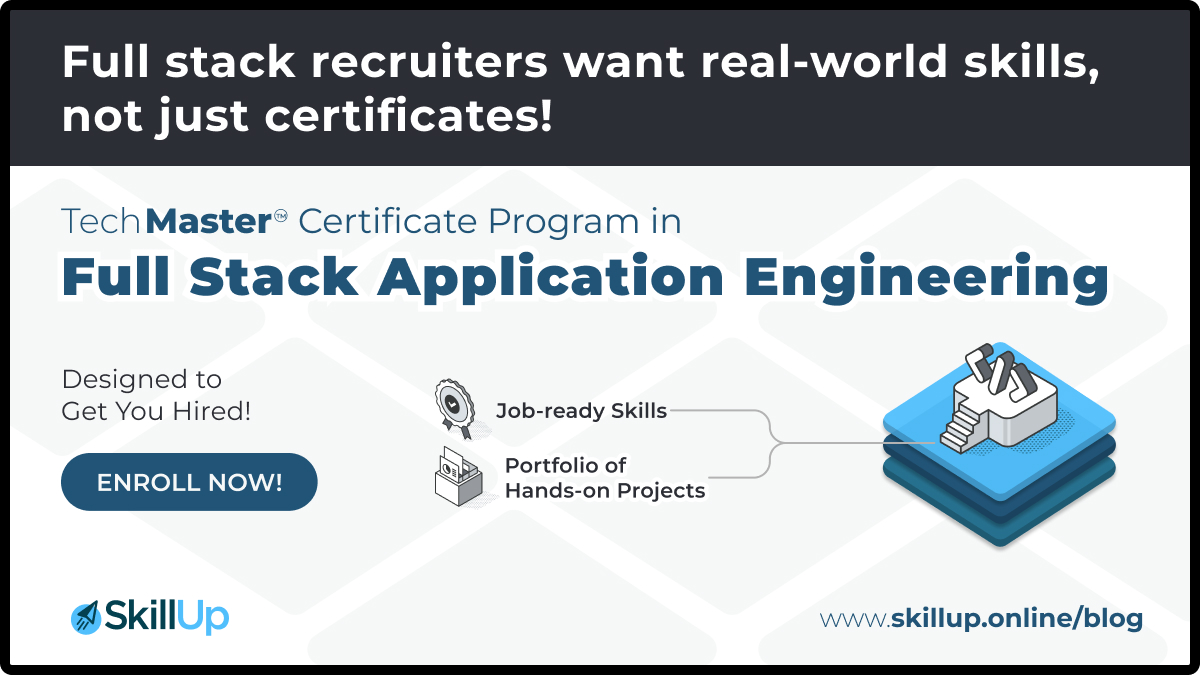
One of the most effective ways to accelerate your journey on how to become a full stack developer is to follow a guided and structured learning path. The TechMaster Certificate Program in Full Stack Application Engineering is designed specifically for working professionals.
Program highlights
- Eight-month structured learning path with 14 courses
- Covers front-end, back-end, databases, and deployment
- Flexible learning format suitable for full-time professionals
- Focus on job-ready skills instead of theoretical learning
What you gain during the program
- Technical assessments to evaluate your progress
- Pre-employability training to prepare for real-world roles
- Mock HR and technical interviews
- Hands-on projects that demonstrate your capabilities
This approach ensures you are prepared not just to learn but to secure full stack developer jobs.
Full Stack Developer Career Path
This career path offers a balanced mix of creativity and analytical thinking, making it one of the most versatile roles in the tech industry. As a full stack developer, you work across both front-end and back-end technologies, allowing you to understand how complete applications are built and optimized.
This path typically starts with foundational roles where you learn core full stack developer skills. Over time, it can lead to senior developer roles, technical leadership positions, or even product-focused roles where you contribute to business strategy.
A key advantage of the full stack developer career path is the continuous opportunity to learn and apply innovative technologies. As the tech landscape evolves, developers are expected to adapt, experiment, and implement new tools and frameworks. This makes the role dynamic and intellectually engaging, especially for professionals who enjoy problem-solving and building scalable solutions.
Final Thought
If you are thinking about how to become a full stack developer, it is not just about learning to code but also building a career that offers growth, stability, and long-term relevance. Full stack development opens doors to higher-value roles, better compensation, and the flexibility to work across industries or even remotely.
You do not need to pause your current career to make this shift. With a structured plan, consistent effort, and practical skill-building, you can steadily move from your current role into a more future-ready position. The professionals who succeed are not the ones who move the fastest but the ones who stay consistent and focused on outcomes.
When approached correctly, this transition is not a risk. It is a calculated step toward a full stack developer career path with clear progression, measurable growth, and long-term career security.

SkillUp Online