Earlier this year, we spoke to several HR leaders, L&D professionals, and compliance officers across industries in the U.S. and Canada. The motive was to explore a critical question: Is compliance training actually working?
The consensus? It isn’t—not in the ways that truly matter. These decision-makers described outdated content, low engagement, and worryingly poor retention. Too often, compliance programs are treated as check-the-box exercises rather than tools for real behavioral change.
This isn’t just a content problem. It’s a design problem. And the gap between what’s taught and what’s needed is only getting wider.
Here’s what today’s decision-makers are seeing—and how some are starting to turn things around.
3 Out of 4 Say Compliance Training Isn’t Retained
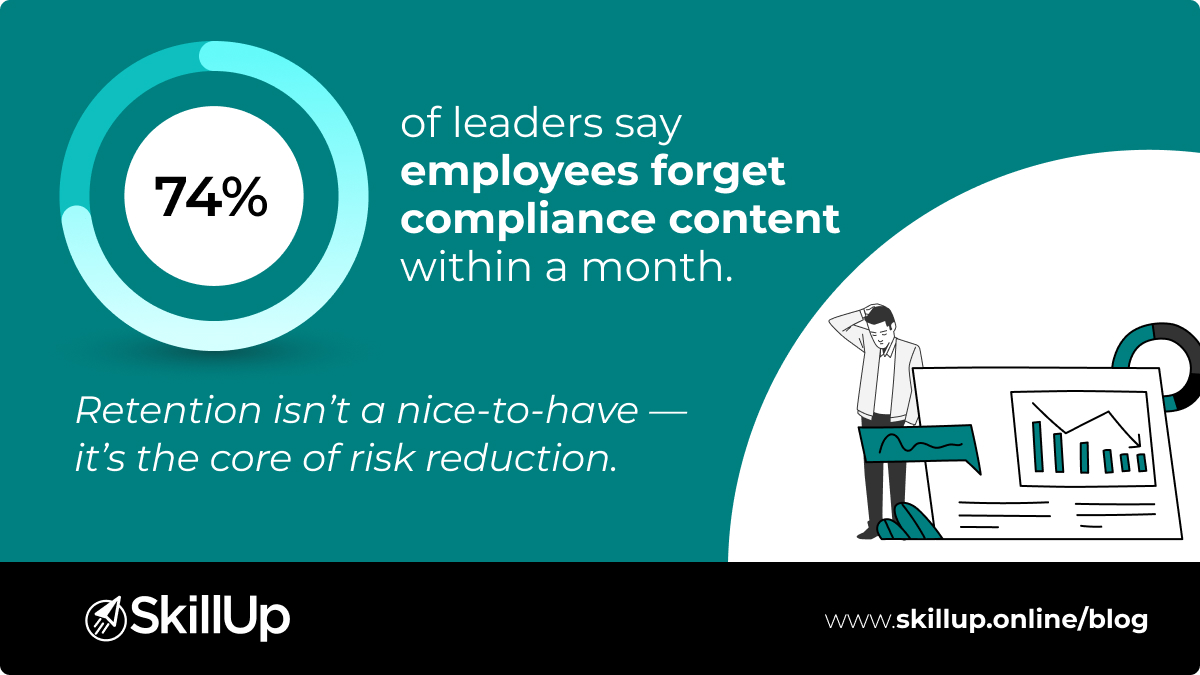
One of the most striking stats from our survey? 74% reported employees forget what they learned within a month.
Even more troubling — over 40% said employees can’t recall basic responsibilities around harassment reporting, data handling, or phishing risks without looking it up.
When retention is that low, your organization isn’t protected—it’s just papered over. And in today’s regulatory climate, that’s a real risk.
The Real Compliance Training Mistakes
We dug deeper. Why isn’t training sticking? The top reasons they gave:
- Boring content formats (click-through PDFs, text-heavy slides)
- One-size-fits-all content that doesn’t apply to different roles
- Annual refreshers that don’t reflect current threats or laws
- Lack of interactivity or discussion
- Too much legalese, not enough “real world”
In short, most compliance training still treats learners like liabilities, not intelligent humans. That’s not just ineffective—it’s outdated.
Complaince Training for 2025—Not 2005
There was also consensus on where training needs to evolve—and quickly:
“We have cybersecurity modules that don’t even mention AI or deepfakes,” one HR leader admitted.
“Our harassment training still shows office scenes from the 90s,” said another.
That disconnect isn’t harmless nostalgia. It’s the difference between prevention and a PR disaster. As one respondent put it:
“If your compliance training still looks like an episode of Mad Men, you might as well keep your lawyer on speed dial.”
The world of 2025 isn’t the same as the 1950s — it’s remote, hybrid, AI-integrated, and socially transparent. Compliance training needs to reflect that, or it becomes another failed compliance program.
What Actually Works (Based on Those Getting It Right)
Amid the frustration, there was a bright spot: about 18% of respondents said they’ve significantly improved employee compliance through modern approaches.
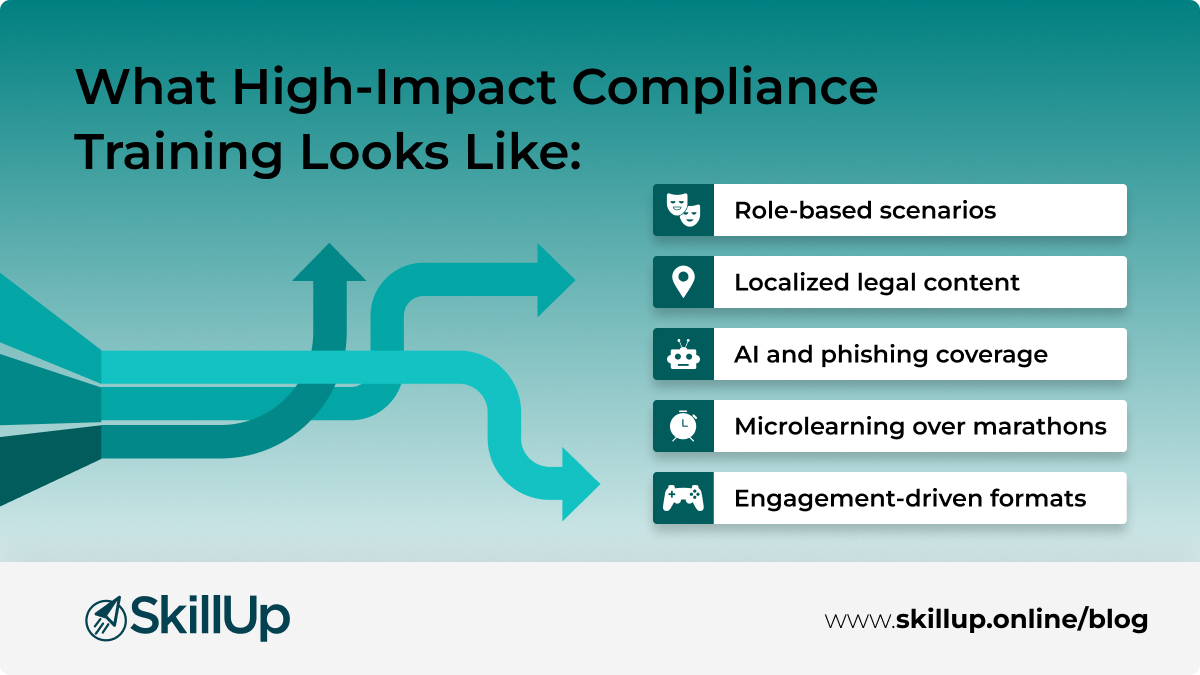
What do these programs have in common?
- Scenario-based learning grounded in real roles
- Interactive, modular content that learners actually engage with
- Localized legal compliance with jurisdiction-specific content (U.S., Canada, etc.)
- Ongoing microlearning, not once-a-year marathons
- Updates that reflect real risks—like phishing scams, generative AI misuse, and digital harassment
The result? Higher retention, fewer escalations, and better employee perception of compliance training—no longer the “boring stuff we have to do,” but something relevant, useful, and often appreciated.
What This Means for You
If you’re reading this as an HR, L&D, or risk leader, here’s the hard truth:
If your compliance program isn’t actively improving behavior, it’s not reducing risk—it’s increasing it.
Luckily, there’s a shift happening. More organizations are starting to prioritize human-centered, tech-powered compliance learning. They’re rejecting checkbox training and embracing continuous enablement that feels like a value-add, not a punishment.
So, ask yourself:
- Are your harassment, cybersecurity, or data privacy modules grounded in 2025 realities?
- Do employees actually engage with your content—or do they just click through?
- Are your topics relevant—including AI ethics, inclusive practices, and modern scams?
What SkillUp Is Seeing Across the Industry
At SkillUp, we’ve been building compliance training that scales across global teams—but always keeps it local and relevant. Our latest offerings include:
- Anti-Money Laundering (AML) training tailored for U.S. and Canadian laws
- Interactive scenarios on elder financial abuse, phishing, and AI misuse
- DEIB compliance content written for actual modern workplaces
- Modular courses that HR teams can customize by role or department
- Seamless reporting and tracking for admins—without overcomplicating delivery
We’re not here to pitch, but if your compliance strategy needs a rethink, we’re happy to show you what’s working.
How to Improve Employee Compliance in 2025
To recap:
✔ Ditch the PDF click-throughs.
✔ Customize by role, region, and risk.
✔ Reflect the real world, not retro office culture.
✔ Make learning active, not passive.
✔ Train for retention—not just completion.
Because in a world moving this fast, outdated training doesn’t just fail—it costs you.
For questions about our compliance training solutions or to learn how SkillUp can support your organization’s goals, you can contact us at [email protected]. We’d be happy to assist with program details, customization options, or implementation support.

Compliance Training Expert
SkillUp