The role of a data analyst is one of the most in-demand roles in the job market right now. According to the U.S. Bureau of Labor Statistics, employment for data scientists, the category it uses to track much data-analysis work, is projected to grow 34% from 2024 to 2034, far above the average for all jobs. A data analyst gathers, cleans, and interprets data to help a business make better decisions. If you want to become a data analyst, this guide is for you, whether you are switching careers, recent graduates, or upskilling in your current role. It walks through what the job involves, the skills to build, what entry-level work looks like, a step-by-step path, and how long it takes.
What Does a Data Analyst Do?
A data analyst turns raw numbers into answers that a business can act on. Day to day, that means collecting data from different sources, cleaning it so it is accurate and consistent, analyzing it to find patterns, building visualizations, and presenting the findings to people who make decisions. The presenting part matters as much as the analysis, because insights only help if stakeholders understand them.
Analysts work in almost every industry. In finance, they track risk and spending patterns. In healthcare, they study patient outcomes and operational efficiency. In e-commerce and tech, they analyze user behavior to guide product and marketing choices.
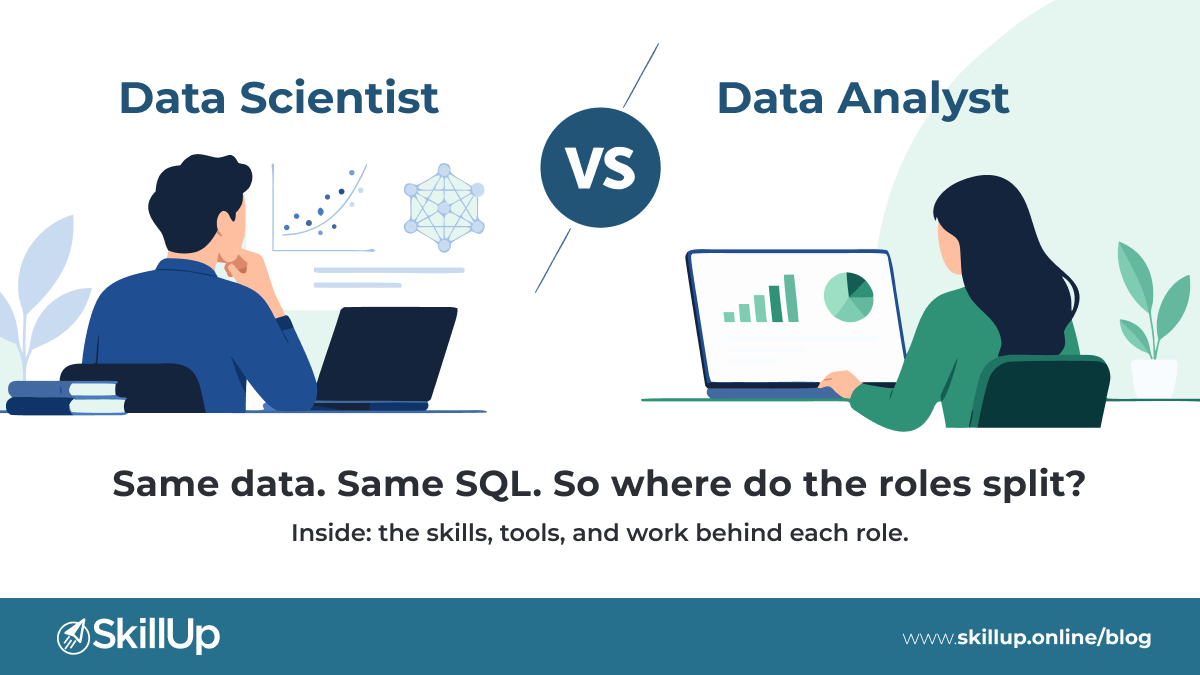
It also helps to separate the data analyst from the data scientist, since the titles often get mixed up. A data analyst focuses on what happened and why, using SQL, spreadsheets, and visualization tools to answer defined business questions. A data scientist leans more on programming and statistics to build models that predict what is likely to happen next. Analyst work is the common entry point into the wider data field.
Data Analyst Skills You Need to Build
The data analyst skills employers look for fall into two groups, and the useful part is that they stack. You can start with the basics and layer on the rest.
On the technical side, begin with SQL and Excel. SQL lets you pull and filter data from databases, and Excel is still a workhorse for quick analysis. From there, add a programming language, either Python or R, for handling larger or messier datasets. Then layer in a visualization tool like Tableau or Power BI to turn results into clear charts and dashboards.
The soft skills matter just as much. Critical thinking helps you ask the right questions of the data instead of only running numbers. Communication lets you explain findings to non-technical colleagues. Attention to detail keeps small errors from turning into wrong conclusions.
A practical order is SQL and Excel first, then Python or R, then visualization. Building the stack in that sequence gives you something useful to show at each stage rather than waiting until you have learned everything.
Entry-Level Data Analyst: What to Expect
An entry-level data analyst usually starts by supporting senior analysts rather than leading projects. Expect plenty of data cleaning, pulling reports, building dashboards, and answering specific questions for different teams. It is hands-on work that builds the judgment you need for bigger analyses later.
On pay, Glassdoor lists entry-level data analyst salaries in the US at roughly $62,000 to $99,000 a year, landing on average in the low-to-mid $78,000 depending on location, industry, and skills.
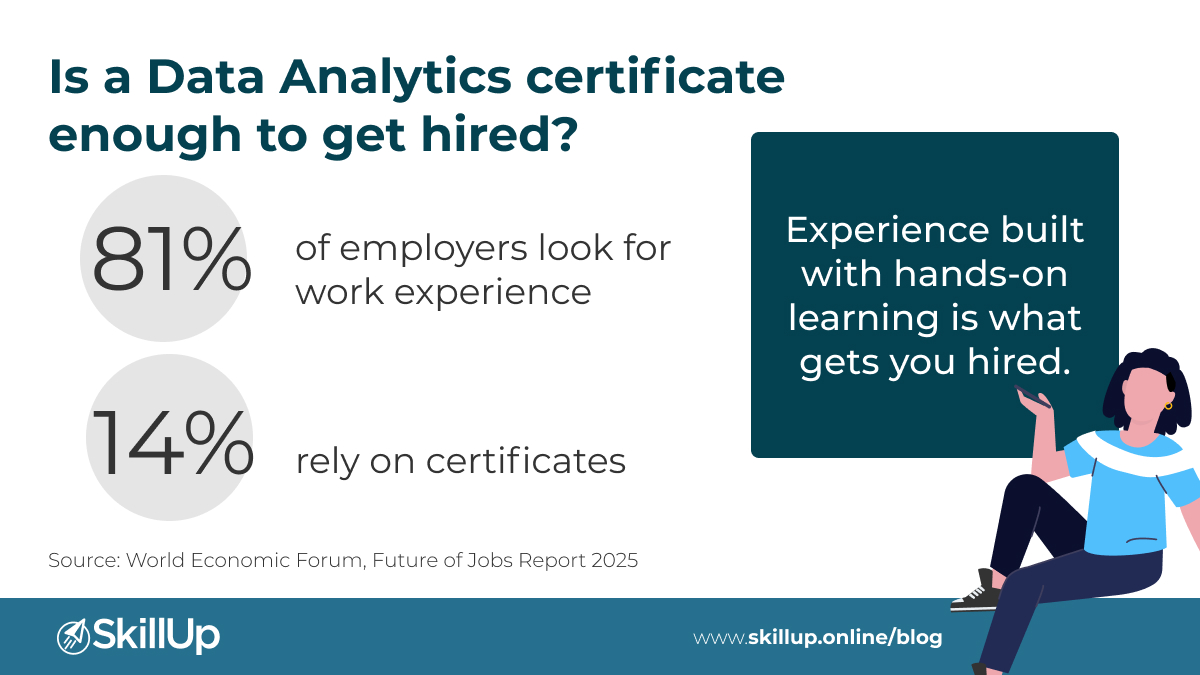
A bachelor’s degree is still commonly preferred, often in a field like math, statistics, computer science, or economics. It is no longer a strict requirement everywhere, though. A growing number of employers will hire the strength of demonstrated skills and a solid portfolio, which is good news if you are switching careers without a directly related degree.
How Do I Become a Data Analyst? A Step-by-Step Path
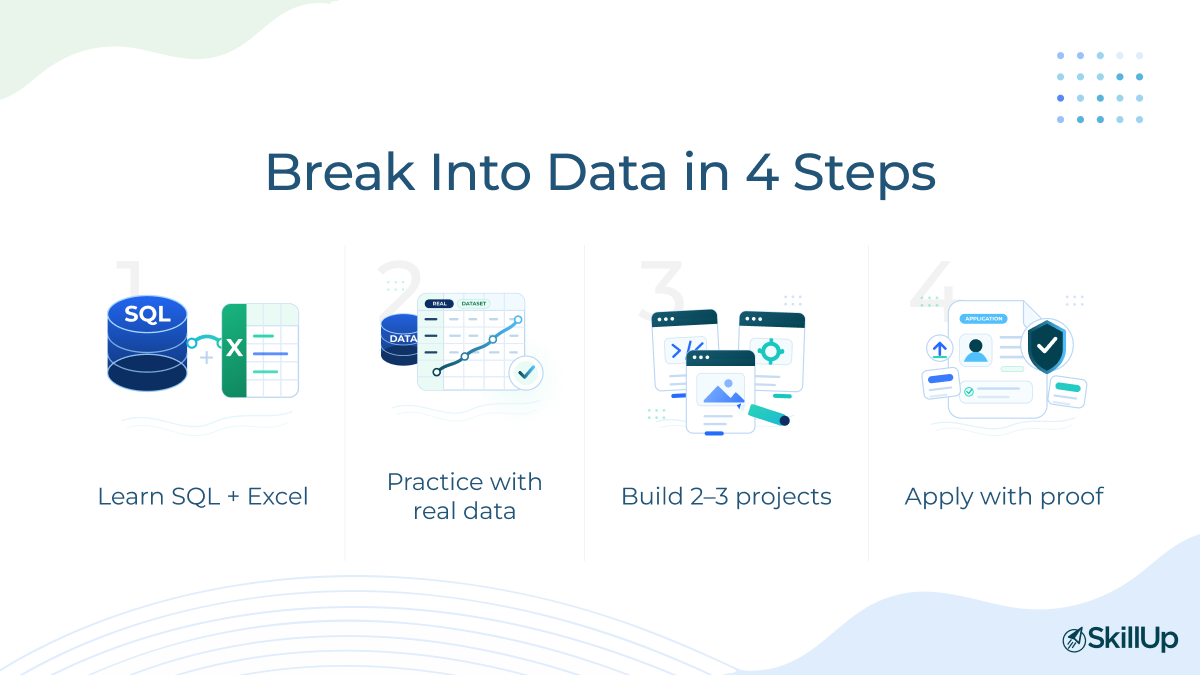
There is no single route in, but most people follow a similar sequence. Here is a practical path from beginner to first job.
- Build foundational knowledge. Get a broad overview of how data analysis works and where it adds value, so you can confirm the field suits you before going deep.
- Learn SQL and statistical language. Start with SQL to work with databases, then pick up Python or R for deeper analysis.
- Work on real-world projects. Practice public datasets from government portals or open data repositories. Real data teaches you more than tutorials do.
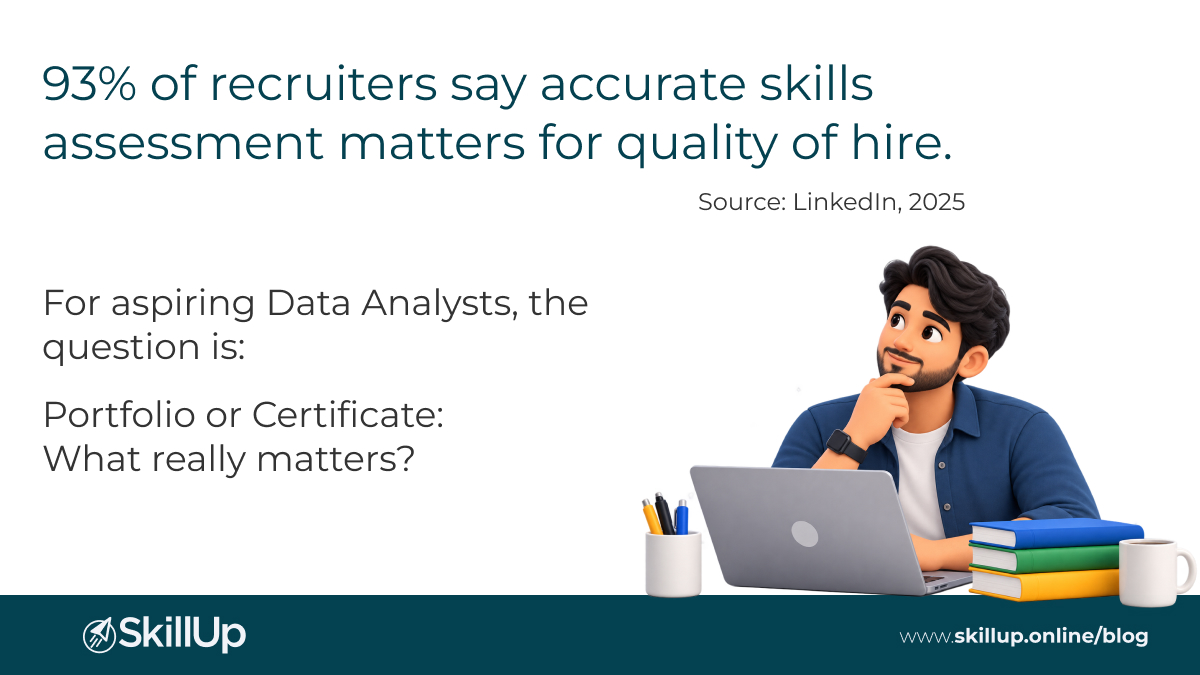
- Build a portfolio. Save your strongest projects in one place, ideally on GitHub. A clear portfolio often carries more weight than a line on a resume.
- Practice presenting findings. Get comfortable explaining results in plain language. Telling a clear story with data is a skill hiring managers test for.
- Apply for entry-level roles. Polish your resume and apply, including to roles that feel like a slight stretch. Skills and portfolios frequently matter more than ticking every box.
- Consider a professional certificate. A structured program can compress the learning and leave you with a portfolio-ready project. The TechMaster Certificate Program in Data Analytics from SkillUp Online is one option built around job-ready skills.

How Long Does It Take to Become a Data Analyst?
A focused certificate route can get you job-ready in around six months, while a traditional bachelor’s degree takes about four years. Where you land depends on a few things: your starting point, prior tech or analytics exposure, how many hours a week you can commit, and the method you choose, from self-study to bootcamps to formal programs.
If speed matters, a professional certificate paired with a strong portfolio is usually the fastest way to a first interview, because it shows both knowledge and applied work at the same time.
Data Analyst Career Growth and Salaries
A data analyst’s career has clear room to grow, in both pay and seniority. Salaries rise meaningfully with experience.
| Career Stage | Average Base Salary (US) |
|---|---|
| Entry-level Data Analyst | ~$62,000 |
| Data Analyst (Mid-level) | ~$93,000 |
| Senior Data Analyst | ~$131,808 |
Source: Glassdoor, US averages, 2025–2026. Pay varies by location, industry, and company.
From there, several paths open up. Many analysts move into business intelligence (BI) analyst roles, step up to senior data analyst and analytics manager positions.
Getting Started
The path to become a data analyst is more open than it looks. You do not need a specific degree or a technical background to start, just the willingness to build the skills in order and prove them with real work. Begin with SQL and Excel, add programming and visualization, and put your projects where employers can see them. If you want a structured way to do that, the right certificate program in Data Analytics can take you from fundamentals to a portfolio-ready project at a steady pace.
Read More – Data Analytics: Definition, Uses, Examples, and More

SkillUp Online