You have probably spent time on this. A newsletter here. A YouTube explainer there. A few podcast episodes during the commute. A LinkedIn thread bookmarked and actually read. By any reasonable measure, you have been paying attention to AI for months.
And yet when Monday morning arrives and there is a real problem on the table, messy data, a workflow that needs rethinking, a decision that involves understanding what an AI system is actually doing; the knowledge does not show up. You know the concepts exist. You cannot use them.
That gap is not a motivation problem. It is not a time problem. It is a neurological trap that the modern content environment is exceptionally good at setting, and most professionals currently sitting inside it do not know it.
Recognition is not the same as recall
When you watch a well-produced 10-minute video explaining how a machine learning model works, something real happens in your brain. The narrator guides you through the logic. You follow it. A small hit of dopamine fires because you feel the satisfaction of comprehension. You understood that.
Except you did not learn it. You recognized it.
Recognition and recall are neurologically distinct. Recognition is passive, your brain follows a pattern that someone else has already constructed and laid out in sequence. Recall is active, your brain retrieves and applies a concept without the scaffold of the original explanation. One requires a narrator. The other does not.
The problem with consuming random, unstructured content is that it builds recognition fluently while doing almost nothing for recall. You accumulate puzzle pieces. But without a structural framework, without the picture on the front of the box, those pieces have no relationship to each other. They sit in isolation. And when a real problem arrives, with real pressure and real ambiguity, there is no framework to fall back on.
This is what the research calls the illusion of progress. You feel like you are learning because the dopamine response is genuine. The comprehension you experience in the moment is real. It just does not transfer. The gap only becomes visible when you try to use it.
AI is the new P&L. Here is the reframe that changes how this sits.
Twenty or thirty years ago, reading a profit and loss statement was a specialist skill. Accountants needed it. The CFO needed it. Most other people in the organization could get by without it. Then something shifted. Businesses became more data-literate. Budget accountability moved further down the org chart. And gradually, a VP who could not read a P&L became a liability. Not because the rules changed overnight, but because the operational baseline quietly moved underneath everyone.
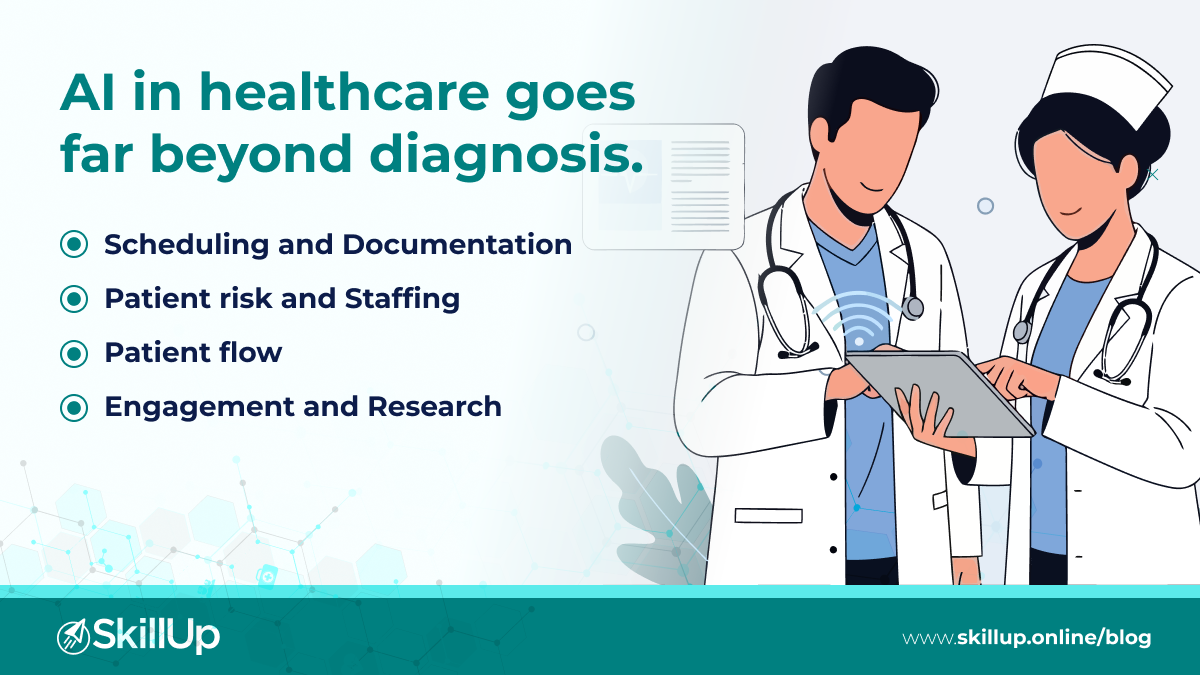
AI is doing the same thing right now, at considerably greater speed. The question is not whether you work in technology. Marketing teams are using clustering algorithms to find purchasing patterns no human analyst could spot in a spreadsheet. Healthcare administrators are using data models to optimize emergency room staffing weeks in advance. Finance, operations, education, logistics, the list is not a prediction. It is current practice.
The professionals who will struggle are not the ones who refuse to engage with AI. They are the ones who have been engaging with it passively, collecting the content, building the recognition, never closing the gap to execution.
The episode of the Skillup Podcast this post accompanies goes into specific detail on what closing that gap actually looks like in practice, the structured learning mechanics, the role of hands-on work, and the distinction between knowing and being career ready.
How to tell if you are actually learning
The illusion is convincing precisely because it feels like progress. So, it is worth having a few concrete tests.
The first is an application under mess. A YouTube tutorial gives you clean pre-sorted data, and a clear problem statement. Real work does not. If you cannot take a concept you have learned and apply it to a situation where the data is incomplete, the problem is ambiguous, and nobody has pre-packaged the answer, you are still in the recognition loop.
The second is explanation without the scaffold. Can you explain the concept without using the exact framing of the original video or article used? Not paraphrase it, genuinely reconstruct the logic in your own words, from your own understanding. If the explanation collapses when the narrator’s framework is removed, the knowledge is thinner than it feels.
The third is Monday morning utility. This is the simplest test. Is there anything you learned in the last three months of AI content consumption that you did differently at work this week? Not thought about differently, did differently. If the answer is no across the board, the consumption is not converting.
None of this means the content was worthless. It means it was insufficient on its own. Recognition is a starting point. It is not an endpoint.
The question is what you can do, not what you know
The episode ends with a thought experiment. Picture a hiring panel or promotion reviews five years from now. When AI literacy has fully settled into the baseline of professional competence, the same way spreadsheet literacy did a generation ago, the same way the P&L did before that.
The question worth sitting with is not what that panel will think of candidates who opted out. It is simpler and more immediate than that. It is what you will be able to do.
There is a difference between a professional who has watched AI arrive and a professional who has built real capability around it. The first has opinions. The second has options.
The SkillUp TechMaster Certificate Program in AI & ML Engineering is built for the transition from the first category to the second — structured, high-friction learning with defined milestones, hands-on application, and a capstone that forces real execution rather than recognition. If you are ready to stop collecting tutorials and start building something you can actually use, that is the logical next step.
The content is not the problem. There has never been more of it. The structure is what most people are missing.

SkillUp Online