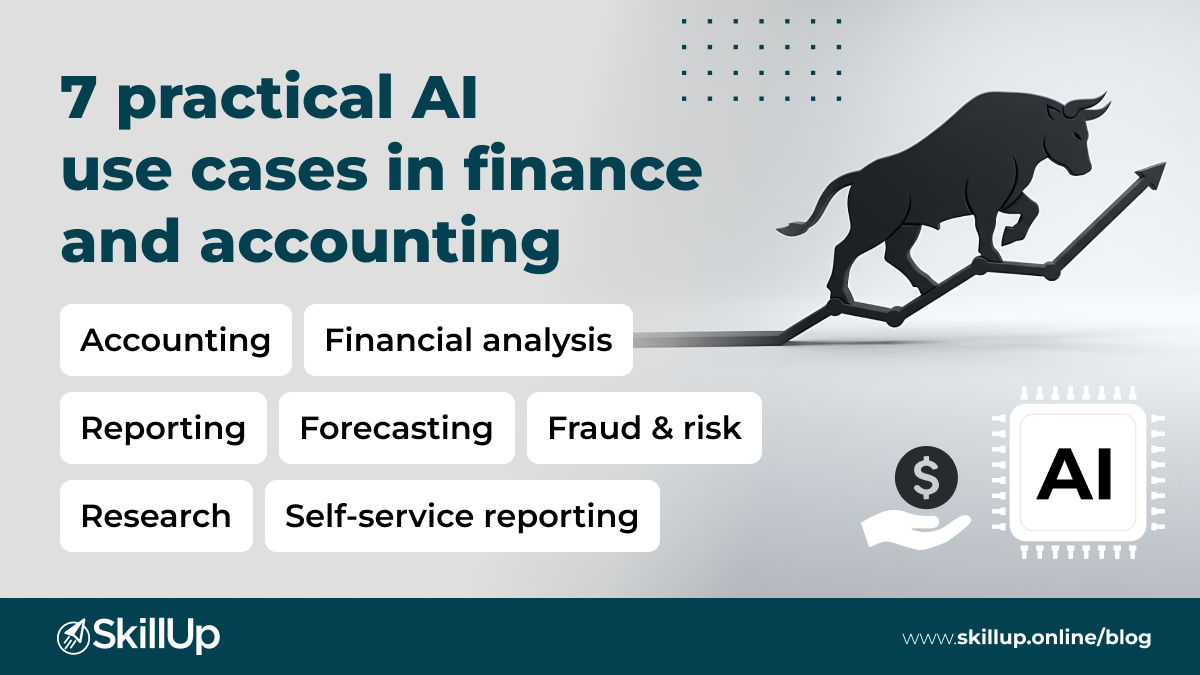
Finance teams work with a constant stream of numbers, documents, and decisions. Financial statements, invoices, budgets, forecasts, regulatory filings, earnings calls, and internal reports all need to be reviewed and interpreted regularly. The challenge is turning that information into useful work without spending too much time on repetitive tasks.
This is where AI use cases for finance become practical. Instead of replacing financial expertise, AI in finance can help teams process information, identify exceptions, prepare drafts, and answer routine questions efficiently. The best applications give professionals more time for analysis, planning, and business decisions.
AI in Finance: What Can It Do?
AI in finance includes machine learning, predictive analytics, natural language processing, automation, and generative AI. These technologies do a variety of jobs.
Generative AI can create summaries, explanations, narratives, and other draft content from approved information. Large language models can help professionals work with financial documents through natural language.
The distinction matters – a predictive model may produce a forecast, while generative AI prepares a plain language explanation of the factors behind it. The finance professional still checks the data, assumptions, calculations, and conclusions before using the output.
That distinction is central to responsible use of AI in finance. The technology can support the work, but accountability stays with qualified professionals.
1. Automating Routine Finance and Accounting Tasks
One of the most common AI use cases for finance is reducing manual work in repetitive processes.
Teams can use AI to extract information from invoices and receipts, categorize transactions, match records, support reconciliations, identify duplicate payments, and flag unusual entries. It can also help organize close tasks and send exceptions to the right person.
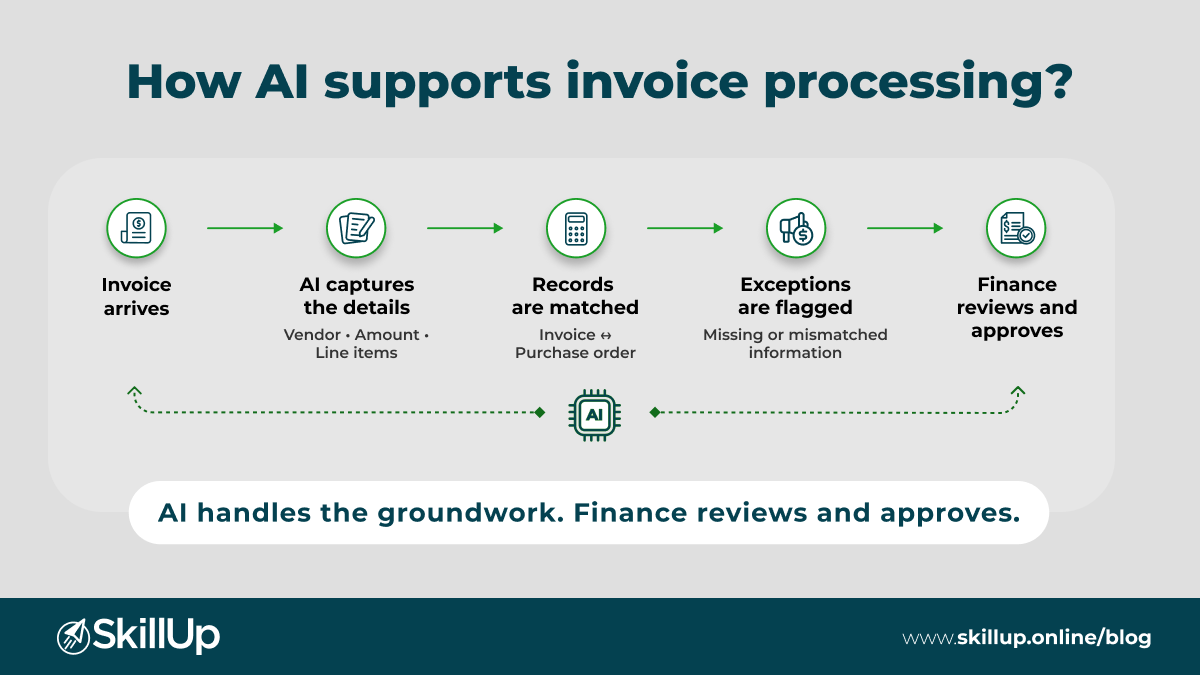
This is where AI in accounting has a practical role. An accounts payable team, for example, could use AI to capture invoice details, compare them with purchase records, and flag mismatches. An employee then reviews the exception and approves the final action.
2. AI for Financial Analysis
Financial analysis often requires information from several reports and documents. Analysts may compare periods, calculate changes, review management commentary, and prepare explanations before they can focus on the business question.
AI for financial analysis can speed up this groundwork. It can extract KPIs from financial statements, compare performance across periods, summarize earnings calls, identify changes in revenue or margins, and prepare an initial variance analysis.
This is one of the more useful AI use cases for finance, as it helps in reducing document heavy work while keeping interpretation in human hands.
3. AI in Accounting and Financial Reporting
Accounting and reporting teams can use AI to support reconciliations, account classification, financial statement review, close activities, management reports, and audit preparation.
AI in accounting can also help prepare draft variance explanations. If operational expenses rise sharply in one department, an approved system could compare current and prior period data and draft a possible explanation for review.
So, how AI improves financial reporting comes down to speed, consistency, and easier interpretation. AI can organize supporting information, identify inconsistencies, and create first drafts of management commentary. It can also help teams prepare documentation for audits.
Final figures and narratives must still be checked against approved financial data, accounting policies, and internal controls. How AI improves financial reporting should therefore be viewed as support for the reporting process, not a replacement for accounting review.
4. AI in Financial Forecasting and FP&A
Forecasting requires finance teams to consider historical results, current performance, business drivers, and changing assumptions. AI in financial forecasting can help process these inputs and make scenario work easier.
Common applications include rolling forecasts, revenue and expense projections, cash flow planning, sensitivity analysis, demand planning, and stress testing.
This shows how generative AI is used in finance and where AI in financial forecasting can support planning. It can turn complex scenario outputs into a clearer narrative for managers. The finance team still owns the assumptions and decides which scenario is appropriate.
5. Fraud, Risk, and Compliance Monitoring
Risk teams often need to review large numbers of transactions and alerts. AI can scan those records for unusual patterns and help prioritize cases for investigation.
Applications include fraud monitoring, AML transaction review, credit risk analysis, KYC support, sanctions screening, and operational risk reporting. These are important AI use cases for finance, as the technology enables the review of large datasets consistently.
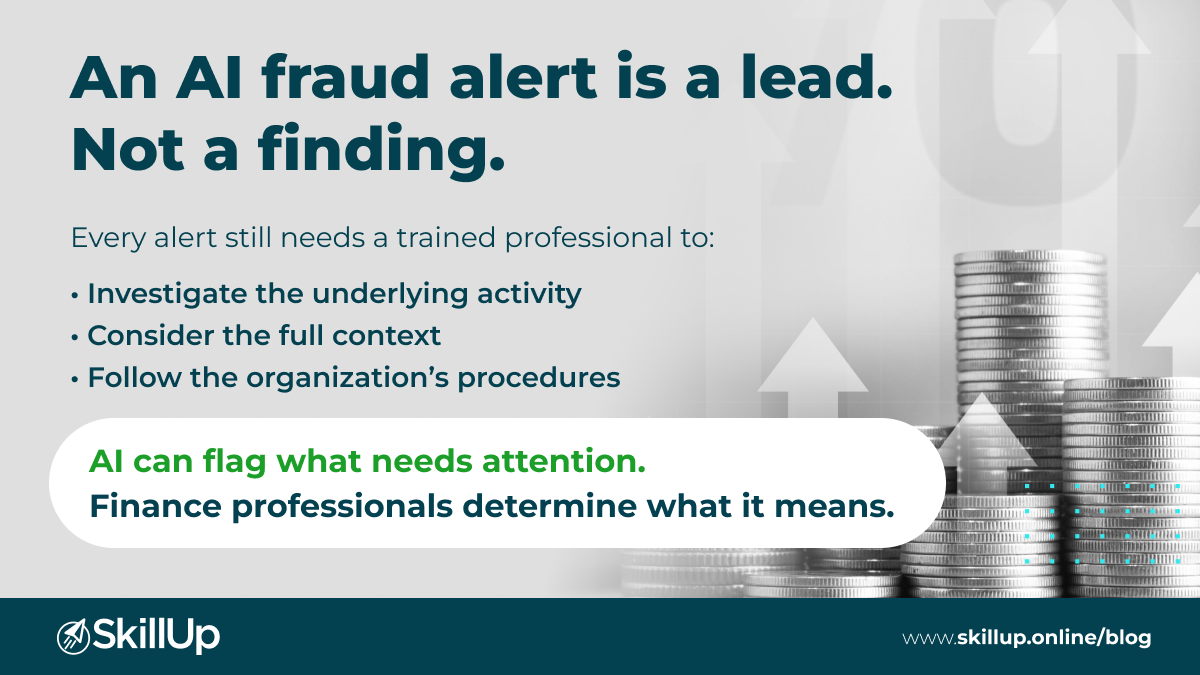
An alert is not proof of fraud – a trained professional must investigate the underlying activity, consider the context, and follow the organization’s procedures. This human review is especially important when AI is used in regulated financial processes.
6. Research and Market Intelligence
Generative AI can summarize long documents, extract relevant figures, compare information across sources, and prepare research briefs. It can also answer questions about approved documents in natural language.
This is another clear example of how generative AI is used in finance. Instead of spending hours finding relevant passages, a professional can use AI to create a starting point and then verify important facts against the original source.
This also applies to AI for financial analysis, particularly when analysts need to compare multiple companies or periods. The tools accelerate research, but the analyst remains responsible for interpretation.
7. Self Service Reporting for Business Teams
AI can help employees quickly find answers to routine finance questions, such as expense policies, approval requirements, coding rules, and reporting procedures.
It can also organize internal finance documents and provide guidance based on approved company information. This makes AI useful for how AI can automate finance processes by reducing time spent on repetitive questions and administrative support, while keeping sensitive information protected.
Using AI Without Losing Financial Control
There is a wide range of AI use cases for finance, but AI should support financial professionals rather than make decisions on their behalf. It can prepare an analysis, summarize information, flag an unusual transaction, or draft a report, but the final output should be reviewed by someone with the right financial context.
Human review is especially important when AI outputs could affect financial reporting, compliance, risk assessment, or business decisions. Finance professionals need to check the underlying data, assumptions, calculations, and context before approving or acting on the result.
Building Practical AI Skills for Finance Professionals
Finance professionals do not necessarily need programming skills to work effectively with AI. They need to understand where it fits into their workflows, how to ask useful questions, and how to validate the results.

The Generative AI for Financial Professionals Program from SkillUp Online is designed for intermediate to advanced finance professionals who want practical experience applying AI to financial research, risk monitoring, financial modeling, reporting, compliance, and FP&A workflows. The program covers tools such as Microsoft Copilot, ChatGPT, Claude, and Bloomberg AI, with practical work involving KPI extraction, earnings call summaries, risk monitoring, fraud and AML workflows, scenario planning, and FP&A automation. It includes three courses, hands on labs, projects, assessments, mentor support, and an estimated learning time of 90 hours.
Where AI Fits in Modern Finance
The most essential AI use cases for finance are not about replacing individual financial expertise. They are about reducing repetitive work, improving access to information, and helping professionals spend more time on analysis and decisions.
These tools can support accounting, reporting, analysis, forecasting, risk review, and research when they are implemented with appropriate safeguards. Their value depends on reliable data, secure systems, clear governance, and careful human oversight.
Across these AI use cases for finance, the strongest results come from clean data, secure systems, clear governance, and human review. Finance teams can gain practical value from AI while keeping accountability where it belongs: with finance professionals.
Frequently Asked Questions
What are the most common AI use cases for finance?
The most common AI use cases for finance include invoice processing, transaction categorization, account reconciliation, financial analysis, forecasting, fraud detection, compliance monitoring, document review, reporting, and research. AI can also support FP&A teams by helping them compare scenarios, identify variances, and prepare management commentary.
How is AI used in accounting?
AI in accounting is used to automate or support repetitive activities such as invoice data extraction, transaction classification, account matching, reconciliations, duplicate payment detection, close management, and audit preparation. It can also prepare draft explanations for unusual changes in account balances. Accountants remain responsible for reviewing the output and approving the final treatment.
How does AI improve financial reporting?
How AI improves financial reporting depends on its ability to organize information, identify inconsistencies, and prepare draft narratives more quickly. It can help reporting teams compare periods, extract figures from supporting documents, identify missing information, and create initial variance explanations. Human review is still required to confirm accuracy, compliance with accounting policies, and consistency with internal controls.
How is AI used in financial forecasting?
AI in financial forecasting can analyze historical performance, current business drivers, and approved assumptions to support revenue projections, expense planning, cash flow forecasts, rolling forecasts, sensitivity analysis, and stress testing. Generative AI can also explain forecast changes in plain language. Finance professionals must validate the assumptions and decide which scenarios should guide business decisions.
How is generative AI used in finance?
When it comes to how generative AI is used in finance, the applications are quite varied. They include summarizing earnings calls, preparing financial research briefs, drafting management commentary, answering questions about approved documents, explaining variances, and converting complex analysis into clear business language. It is most effective when used as a controlled assistant that produces drafts for review rather than as an independent decision maker.
How can AI automate finance processes?
How AI can automate finance processes depends on the workflow and the quality of the underlying data. AI can automate document extraction, transaction matching, exception identification, routine reporting, reconciliation support, and responses to common finance questions. Organizations should use approved systems, role based access, audit trails, and review checkpoints to maintain control.
What are the risks of using AI in finance?
The main risks include inaccurate outputs, hallucinated information, biased results, data leakage, weak access controls, insufficient documentation, and overreliance on automated recommendations. These risks can be reduced through approved tools, reliable data sources, human review, testing, monitoring, and clear governance policies.
Do finance professionals need programming skills to use AI?
Programming skills are not always necessary. Finance professionals can begin by learning how to identify suitable workflows, write clear prompts, evaluate AI outputs, protect sensitive information, and verify results against authoritative sources. Technical skills may become useful for advanced automation, data integration, and model development, but they are not required for every finance application.
Read More – AI Courses for Finance Professionals: Skills, Tools and Learning Paths in 2026

SkillUp Online