A career change is becoming increasingly common as industries evolve, new technologies emerge, and professionals seek better opportunities.
In 2026, accessible online learning, professional certifications, and changing workforce demands have made switching careers more achievable than ever before. Whether the goal is higher earnings, better work-life balance, or entry into a growing field, a successful career change requires more than motivation alone. It needs a clear plan, the right skills, and realistic expectations.
This guide provides a practical step-by-step framework to help professionals at any stage of life assess their options. It also helps you build relevant skills and move confidently toward a new career path.
Why People Make a Career Change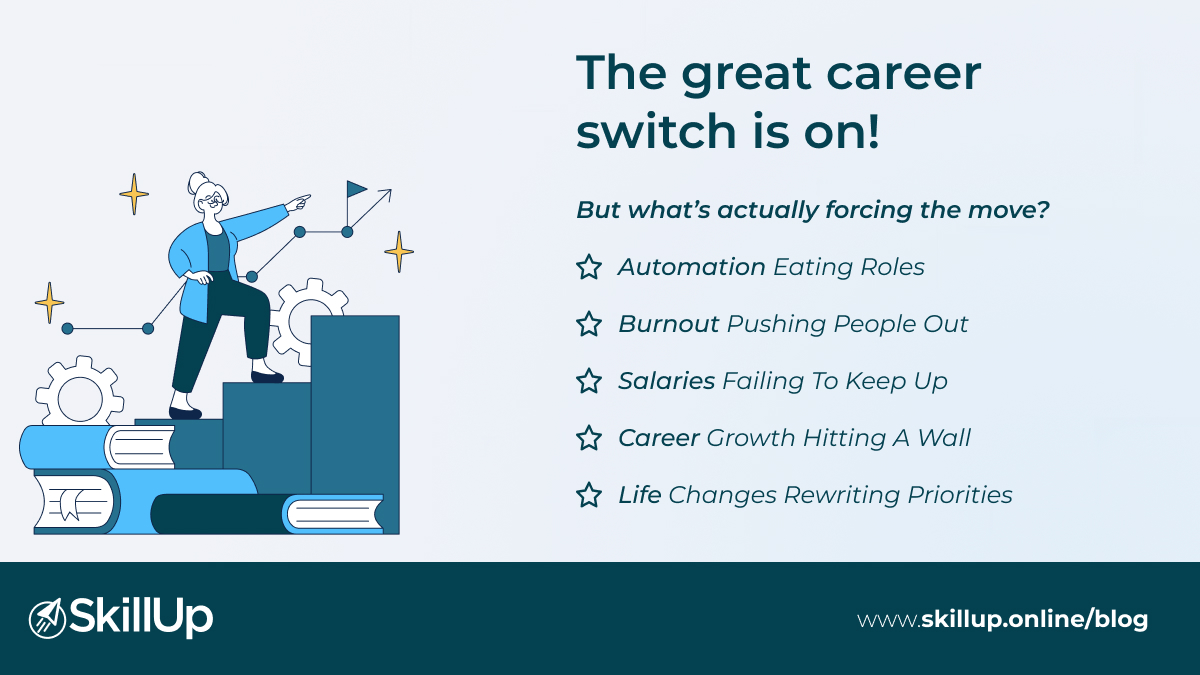
Career change among professionals commonly comes down to a few situations:
Role becoming automated or redundant: If the job is largely taken up by AI or requires doing the same repetitive task every day, working in the same role feels more risky than leaving. Generally, people in jobs that once felt safe, such as writing, design, and data work, are rethinking their options as machines take on more of the work.
Burnout in the current field: Another reason is physical and mental fatigue. Long hours and constant stress take a toll on people. When the job leaves no time for rest or lacks a life outside of work, people consider a change.
Desire for higher earning potential: The purpose of a job is to pay bills. If it does not provide sufficient returns, then there are very few other options left except to switch.
Pursuit of work with more personal meaning: For some people, after having achieved a certain level, the work starts feeling empty. They want a job that fits what they care about or makes a real difference. Often, they look for something with a sense of purpose behind it, not just a paycheck.
Life stage shifts: What matters to people changes as life moves on. Going back to work after a break, settling into life as a parent, or finishing a degree can all change what someone wants from a job.
How to Plan a Career Change
A career change works best when you treat it as a project with clear steps. Three steps turn the idea into a plan:
Assess Your Current Skills
Start by taking note of what you already know, which includes knowledge, technical skills, soft skills, and domain knowledge. List them out, then mark which ones can be carried over to your desired job profile.
Usually, many people find out they have more skills than they expected. Remember that you are never starting from zero.
Define Your New Career Goals
Now, you need to get specific. Identify answers to these questions:
- Which role do you want?
- Which industry do you want to serve?
- What kind of work environment suits you?
Link your goals to what’s actually growing currently, such as AI, data, digital marketing, and green energy, so your effort goes where the jobs are.
Organize the details in a career development plan to keep the goal clear and easily trackable.
Identify the Skill Gaps
Now, compare the two. Check the job descriptions for the role you want and note the skills that come up again and again. Match that list against your own. Whatever appears in the role but not in your skills becomes your learning roadmap. These are the exact things you need to work on.
How to Build Skills for a Career Change
Once you know which skills to build, the next question is how to learn new skills. A few routes work better than others, and the strongest plan usually combines them.
Professional certificate programs
These are often the fastest way to become job ready. A good program covers the skills employers want, while offering mentorship and hands-on projects. Overall, it helps you present yourself as a credible candidate worth hiring. The TechMaster Certificate Program in Data Analytics and the Certificate Program in AI-Augmented Digital Marketing are quality programs from their respective fields.
Online courses in specific tools or domains
If your skill gap is specific and requires only one tool or domain, then targeted online courses are a better option to proceed with. They let you pick a single tool, language, or topic at your own pace.
Volunteer work, internships, or freelance projects
After learning the skills, show your employers that you know how to apply them. The best opportunities can come through volunteering or internships. Welcome the unpaid or small projects too, as they hold significance for beginners in the field.
Shadowing or informational interviews in the target field
Some of the most useful learning comes from people already doing the job. Sitting in on their work or simply asking them about it shows you what the role really involves, which skills matter most, and how they got there. It also builds contacts, and those often lead to opportunities.
Navigating a New Career Path in 2026
A career change in 2026 looks quite different from one a few years ago. Three shifts have changed what the move takes and who it favors:
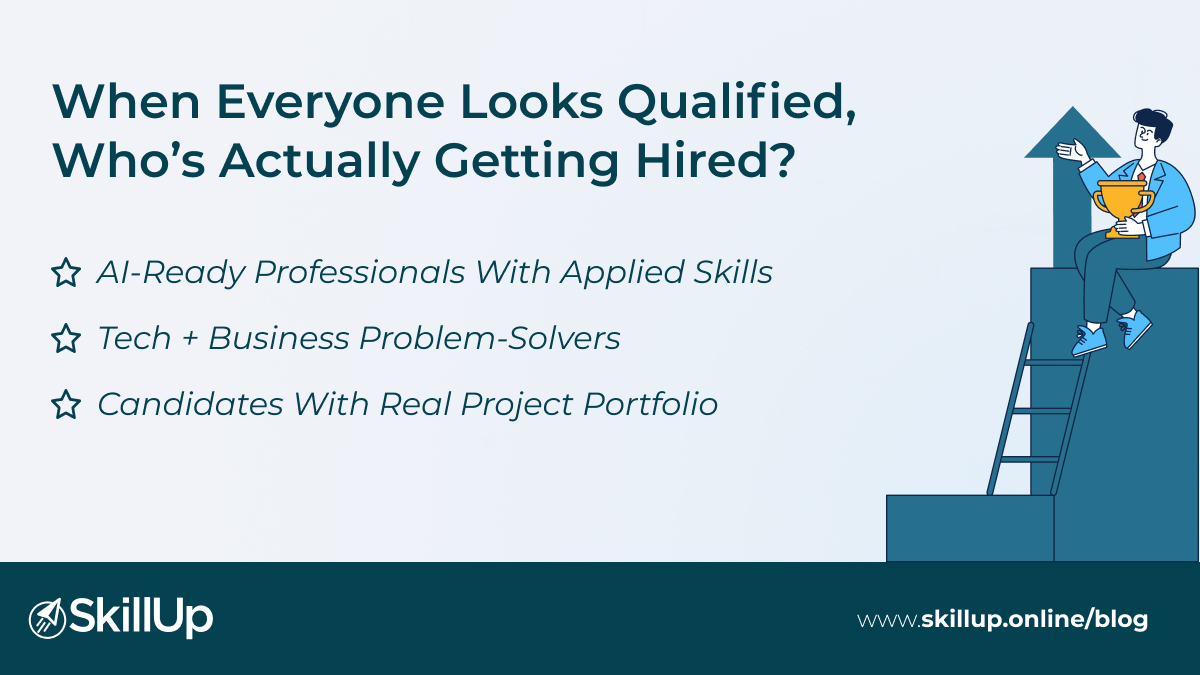
- AI is creating new roles faster than traditional hiring pipelines can absorb. The demand is for people who have the right skills to get the tasks done while utilizing AI.
- Cross-functional skills, i.e. the combination of technology and domain knowledge, are highly valued. The understanding of both the tools and the business helps speed up the work while delivering efficiency.
- Certifications are increasingly accepted in place of degrees in many sectors. What you can do now counts more than where you studied. A growing number of employers treat relevant certification and a portfolio of real work as proof of skill.
One more thing worth doing: get to know people in the field you are aiming for. Networking through events, online communities or simple conversations tends to speed up a career change, as many openings are filled through contacts before they are ever posted.
Taking the First Step Toward Your Career Change
Plans only matter once you act on them. You do not need to map out the whole journey this week, just take these three steps:
Define one target role you want within 12 months
Begin by picking a single role to aim for. One clear target tells you which skills to build, which jobs to study, and what to work toward.
Pick one credential or course to start this week
Momentum beats research here. Rather than comparing options endlessly, pick one course or certificate that fits your target and begin. A program like the TechMaster Certificate Program in AI & ML Engineering is a strong starting point if your target is AI or Machine Learning. Starting small but starting now is what carries the plan forward.
Tell one person in your network about the change
Saying it out loud makes it real. Telling someone, like a colleague, mentor, or friend, creates a bit of accountability and often opens doors. People can direct you towards opportunities when they know you are chasing.
Conclusion
A career change is not about starting over, but about using what you have learned so far. It involves identifying transferable skills, filling a few critical gaps, and applying your experience in a different direction.
With certifications, online learning platforms, and project-based opportunities widely available, the barriers to entering a new field are lower than they have ever been. The key is to start with a clear goal and take consistent action.
SkillUp Online