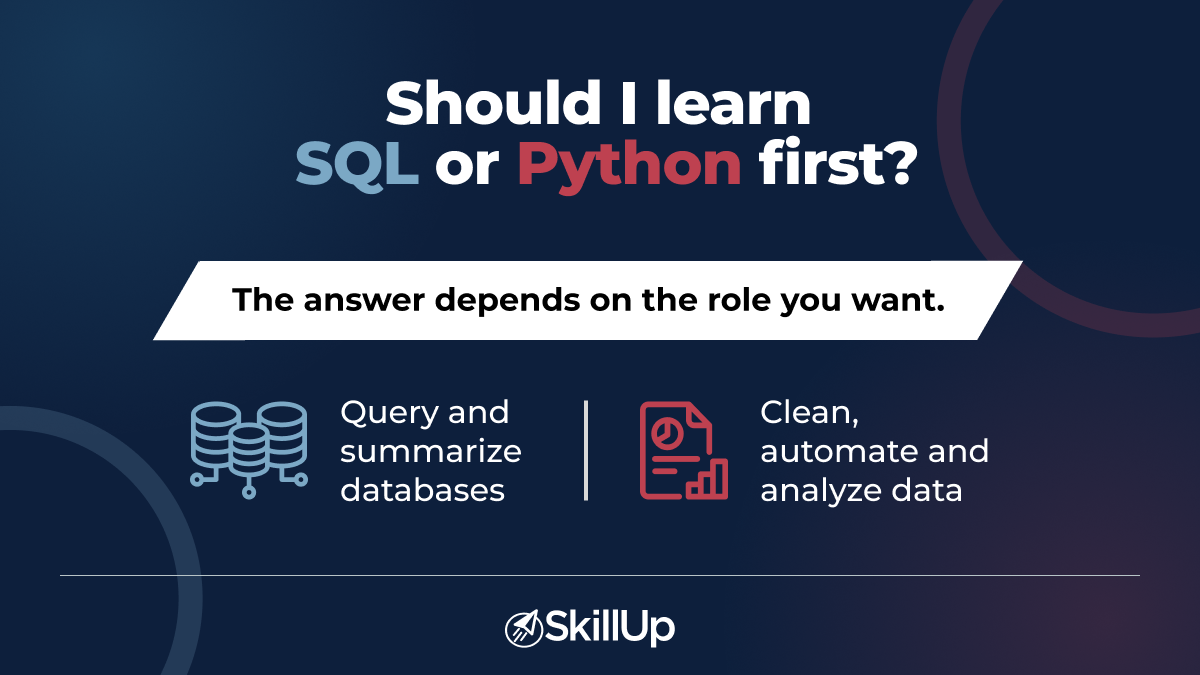
Choosing between SQL and Python can be confusing when you are starting a career in data analytics. Both are useful, but they serve different purposes. SQL helps you retrieve and organize information stored in databases, while Python supports data cleaning, automation, statistical analysis, and visualization.
The right starting point depends on your existing knowledge and career goals. If you want to work with database queries and business reports, SQL may be a good option. If you enjoy programming or want to automate analytical tasks, Python may suit you better.
Understanding SQL vs Python can help you choose a starting point and build the skills you need for your target role.
What Is SQL for Data Analytics?
SQL, or Structured Query Language, is used to retrieve, filter, combine, and summarize information stored in relational databases. Businesses use databases to manage customer records, sales transactions, product details, and other structured information.
Analysts use SQL to answer business questions without manually reviewing large volumes of data.
Common applications of SQL include:
- Filtering data: Finding records that match specific conditions, such as sales from a particular region.
- Combining tables: Bringing customer, order, and product information together using joins.
- Summarizing results: Calculating totals, averages, and counts.
- Grouping information: Comparing revenue, sales, or customer activity across categories.
For instance, a retail analyst might use SQL to compare monthly sales across different locations. Instead of exporting every transaction into a spreadsheet, the analyst can query the database and retrieve the information needed for a report.
SQL is especially useful in roles involving database access, recurring reports, and structured business data. However, not every analyst works with databases daily. Some roles focus more on spreadsheets, dashboards, or other analytical tools, so the value of SQL depends on the job requirements.
What Is Python for Data Analytics?
Python is a general-purpose programming language used for data analysis, automation, and many other technical tasks. It allows analysts to clean datasets, examine patterns, perform statistical calculations, and create visualizations.
Libraries such as pandas, NumPy, Matplotlib, and Seaborn provide tools for working with and analyzing data.
Common uses of Python for data analytics include:
- Data cleaning: Handling missing values, correcting inconsistent entries, and removing duplicates.
- Automation: Repeating data preparation tasks through scripts.
- Statistical analysis: Examining relationships, distributions, and trends.
- Data visualization: Creating charts to communicate findings.
- Complex data processing: Transforming information through multiple analytical steps.
Imagine an analyst who receives sales data from several files every week. Python can help combine the files, standardize columns, clean records, and prepare a summary for further analysis.
Python also supports predictive modeling and machine learning, although beginners do not need to master these areas to use it for everyday analytics.
If you already have programming experience or want to automate repetitive tasks, Python can be a sensible first choice. Beginners can learn it too, but they will need to practice programming concepts such as variables, functions, and data structures.
SQL vs Python: Key Differences
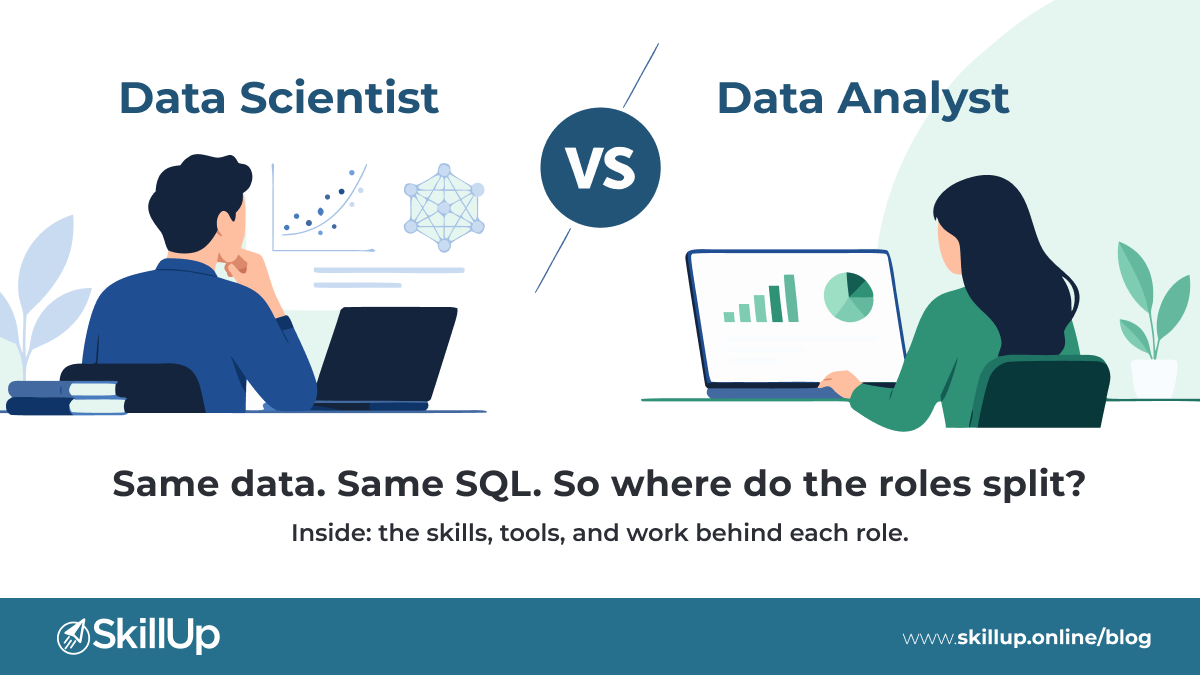
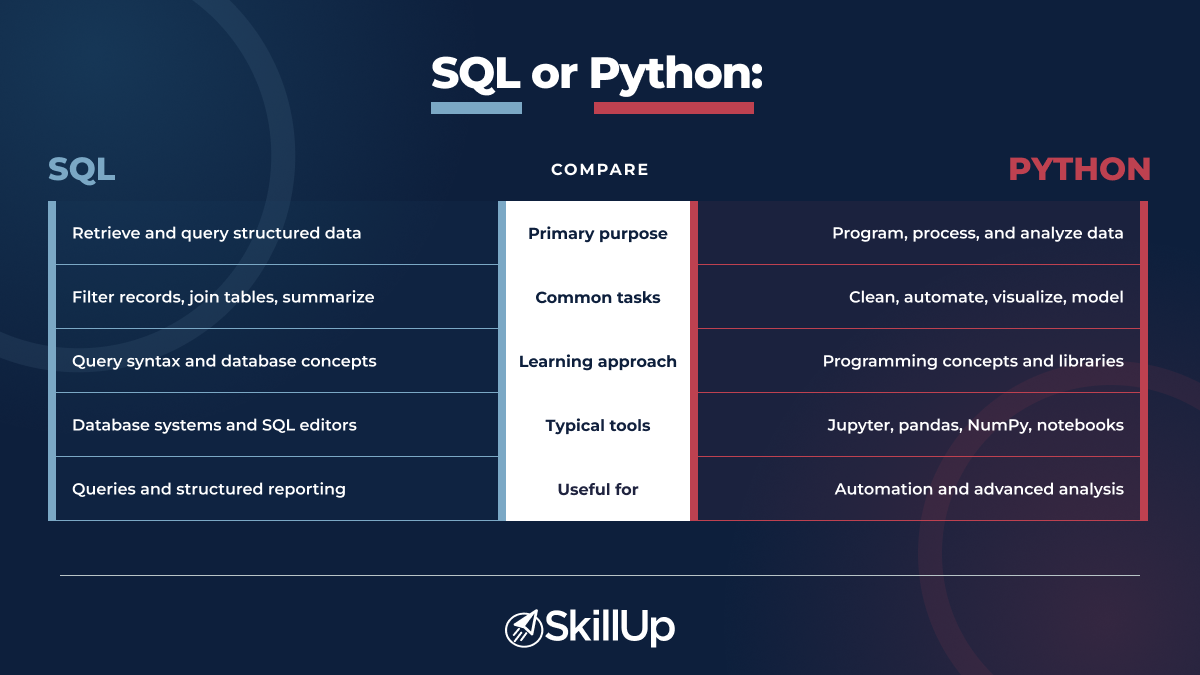
The main difference in SQL vs Python is the type of work each tool is designed to handle. SQL focuses on querying relational databases, while Python offers broader programming capabilities for processing and analyzing information.
Which Skill Is Easier to Learn?
SQL may feel more straightforward if your immediate goal is to retrieve and summarize structured data. Basic queries use commands to select columns, filter records, and group results.
Python requires learning programming concepts before you can use its analytical libraries effectively. However, it may feel more natural if you already know another programming language or enjoy solving problems through code.
Neither tool is universally easier. Your previous experience, learning preferences, and intended use all influence how quickly you become comfortable with it.
How Do SQL and Python Work Together?
The SQL vs Python comparison does not have to end with choosing one tool. Many analytics workflows use both at different stages.
Consider a company investigating a decline in sales:
- Retrieve the data: Use SQL to collect sales records from the company’s database.
- Prepare the information: Use Python to clean records and handle inconsistencies.
- Analyze the results: Compare sales trends and examine patterns across products or locations.
- Present the findings: Share results through charts, dashboards, or reports.
This is one possible workflow, not a requirement for every project. Some analysts rely on SQL and Excel, while others use Python extensively. Power BI and other visualization tools may also be important, depending on the role.
Learning both can expand the range of tasks you can handle, but you do not need to master both before beginning to practice data analysis.
How to Choose the Right Starting Point for Your Data Analytics Career
There is no universal learning order for aspiring analysts. Instead, consider the work you want to do and the skills employers expect.
Consider starting with SQL if:
- You want to query relational databases and work with structured business information.
- Your target roles frequently mention SQL queries, joins, and reporting.
- You want to practice retrieving and summarizing data from existing databases.
Consider starting with Python if:
- You already have some programming experience.
- You want to automate repetitive data tasks.
- You are interested in statistical analysis or complex data transformations.
- Your target roles emphasize Python and analytical programming.
Learn both over time if:
You want to work across different types of analytics projects. SQL can help you access data, while Python can help you clean, transform, and analyze it. You can also develop Excel, visualization, and communication skills alongside them.
When comparing SQL vs Python, review job descriptions for the positions that interest you. Look for the tools and techniques mentioned most often, then choose a starting point that fits your current abilities. Your first choice does not need to determine what you learn throughout your career.
Remember that data analytics skills go beyond writing queries or code. Understanding business questions, checking data quality, interpreting results, and communicating findings are important parts of an analyst’s work.
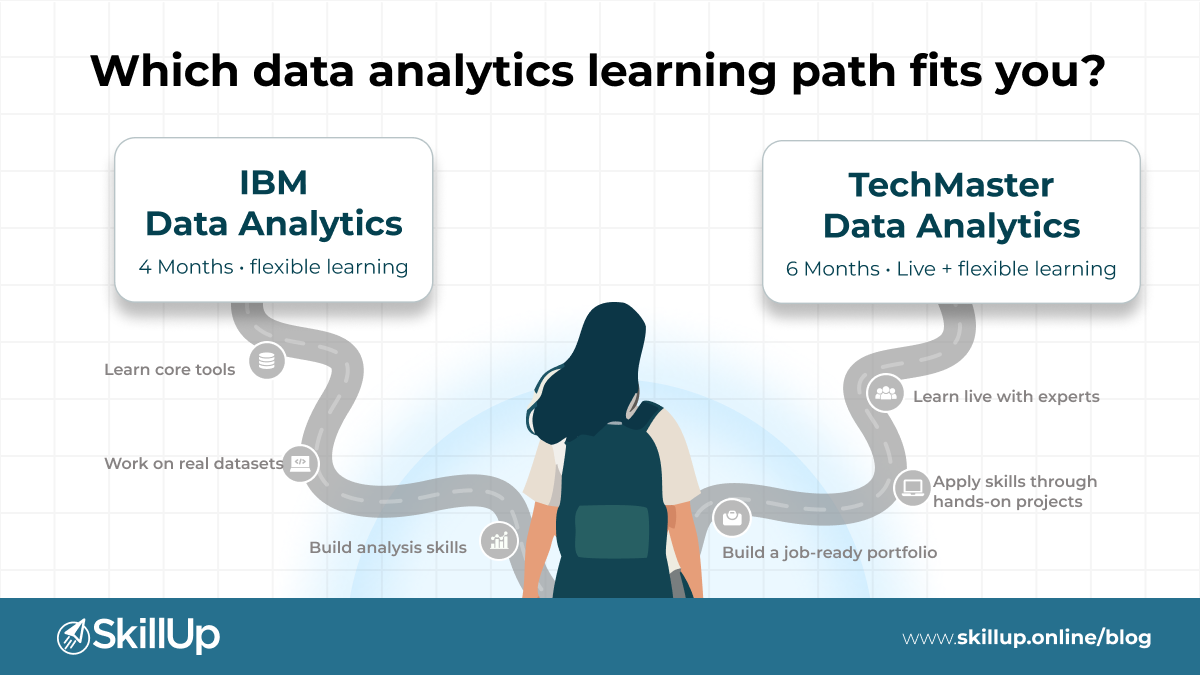
If you prefer a structured learning path, consider the TechMaster Certificate Program in Data Analytics. Review its current curriculum to understand how its SQL, Python, data preparation, visualization, and project-based learning components align with your goals.
Build Skills That Match Your Career Goals
SQL and Python serve different purposes, and neither needs to be the first choice for every learner. Start with the tool that matches your goals, practices with real datasets, and expands your skills as your analytical responsibilities grow.
Once you have identified the skills you need, the next step is to find a learning path that helps you apply them in practical situations. The TechMaster Certificate Program in Data Analytics offers guided learning and hands-on practice with analytical tools. Focus on applying your knowledge to business problems and explaining your findings clearly, rather than simply memorizing commands.
Frequently Asked Questions
Can I become a data analyst with SQL only?
SQL is an essential skill for many data analyst roles, alongside other competencies such as data visualization, spreadsheet analysis, statistical concepts, and programming. The specific skills required vary by role and employer, so developing proficiency across these areas can help build a well-rounded foundation for a career in data analytics.
What are the best skills to learn for a data analyst career?
Useful skills include Excel, SQL, Python, data visualization, statistics, and business communication. The best combination depends on the role, so review job descriptions to identify the tools employers expect.
Is SQL easier than Python?
SQL often feels easier initially because basic queries focus on retrieving and organizing data. Python requires learning programming concepts, but it supports a broader range of analytical tasks. Your experience can influence which feels easier.
Should I learn SQL or Python first for data analytics?
When deciding between SQL vs Python, start with the skill that best matches your goals. SQL suits database-focused reporting, while Python may suit learners interested in programming, automation, and advanced analysis. Neither is the right first choice for everyone.
Do data analysts use both SQL and Python?
Yes, many analysts use both, although requirements vary by role. SQL can retrieve information from databases, while Python can clean, transform, and analyze it. Some positions rely more heavily on spreadsheets and dashboard tools.
How long does it take to learn SQL and Python?
You may learn basic SQL queries in a few weeks with regular practice. Becoming comfortable with Python for data analysis can take several weeks or months. Progress depends on your starting knowledge, practice schedule, and learning goals.

SkillUp Online