Coding got you in the game, but it won’t be the only thing that takes you forward. The real career upgrade for developers today is about expanding beyond execution into impact, ownership, and decision-making.
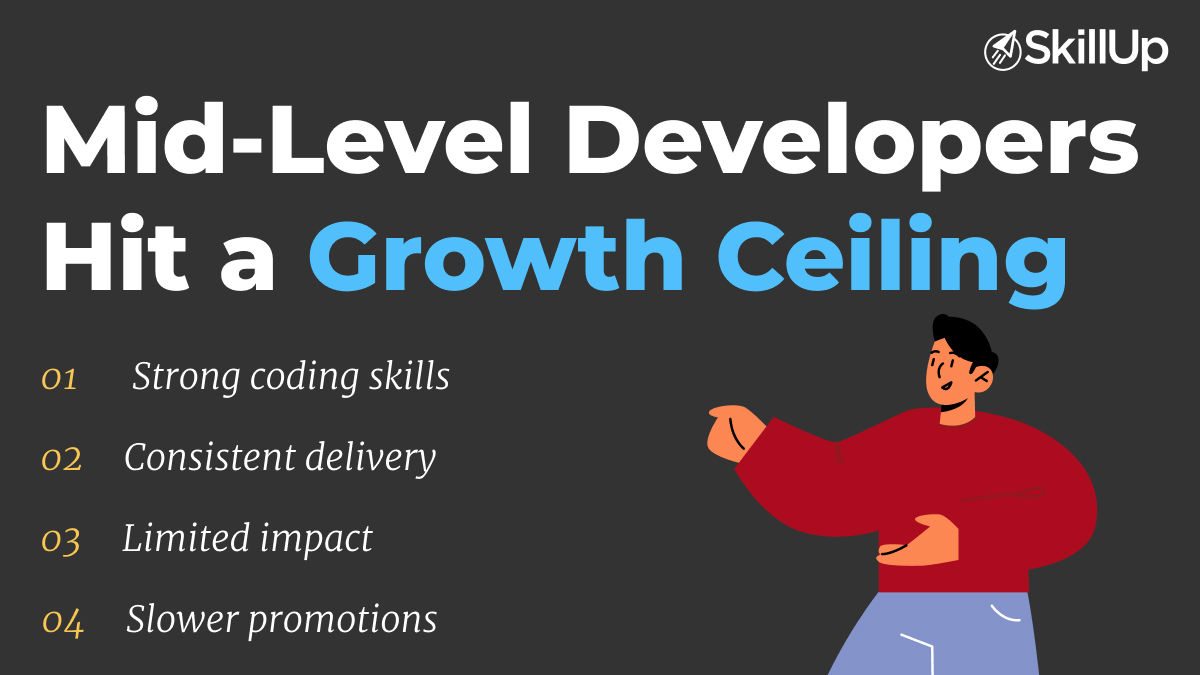
If you are a developer with 4-8 years of experience, hitting a growth plateau is more common than you think. You’re delivering consistently, but promotions slow down and impact feels limited.
You have mastered your lane, shipping features, fixing bugs, owning your stack. Yet the “what’s next?” The question keeps getting louder.
Here’s the truth: you don’t need to start over. You don’t need a brand-new career path. And you definitely don’t need to abandon your identity as a front-end or back-end specialist.
What you need is expansion.
That is why more mid-level developers are making a smart shift toward full stack application engineering, not as beginners, but as professionals leveling up their scope, ownership and influence. It is not about doing more random things. It is about connecting the dots across systems and becoming the kind of developer companies rely on when projects really matter.
Let us talk about how that shift works and why it is becoming the most strategic career upgrade in tech right now.
Why Full Stack Is the Next Logical Step?
1. Employers Want Logical Developers
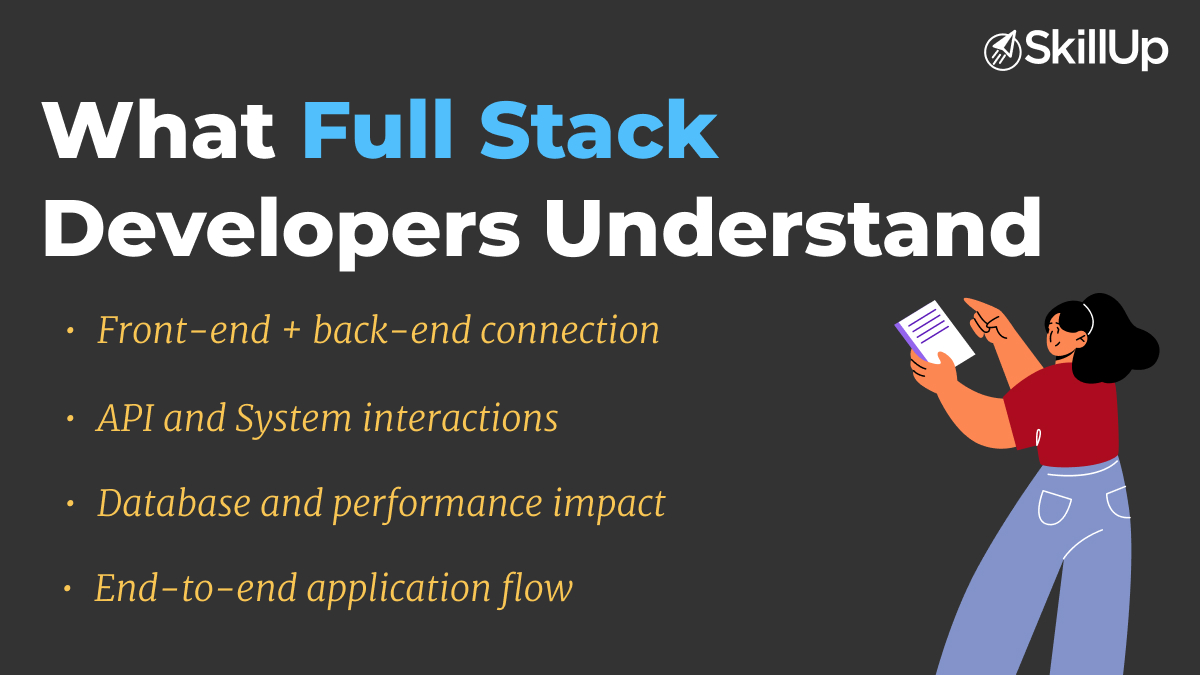
Today’s development teams need people who think holistically:
- How does the UI interact with the API?
- What happens when the server scales?
- How does the database handle peak loads?
- Is performance optimized across the stack?
A developer who can answer all of these is rare and companies know it. Full stack development consistently ranks among the most in-demand software skill sets in 2025 job postings on LinkedIn and Indeed. This means understanding the entire stack; not just pieces of it. This boosts your employability and makes you a stronger candidate for leadership roles.
2. You Don’t Have to Know Everything, Just the Right Things
Full stack isn’t about learning every language or tool out there. It’s about building enough range to work across systems and understand how everything connects.
In practice, that looks like:
- Building and consuming APIs
- Creating responsive frontend experiences
- Managing databases
- Handling authentication and security
- Understanding deployment pipelines
- Debugging across the stack
Chances are, you already know parts of this. Full stack just helps you connect those pieces into a complete, working system.
3. Full Stack Skills are Surging and the Data Proves It
Let us back this up with recent numbers-
- Developers with full stack expertise earn higher median salaries than those specializing only in front-end or back-end roles.
- The global developer population is projected to grow to 47 million by 2025, with full stack roles among the fastest-growing due to demand for integrated solutions.
This is not speculation. The market is signaling loudly: full stack skills = more opportunity.
4. How Full Stack Expands Your Career Options
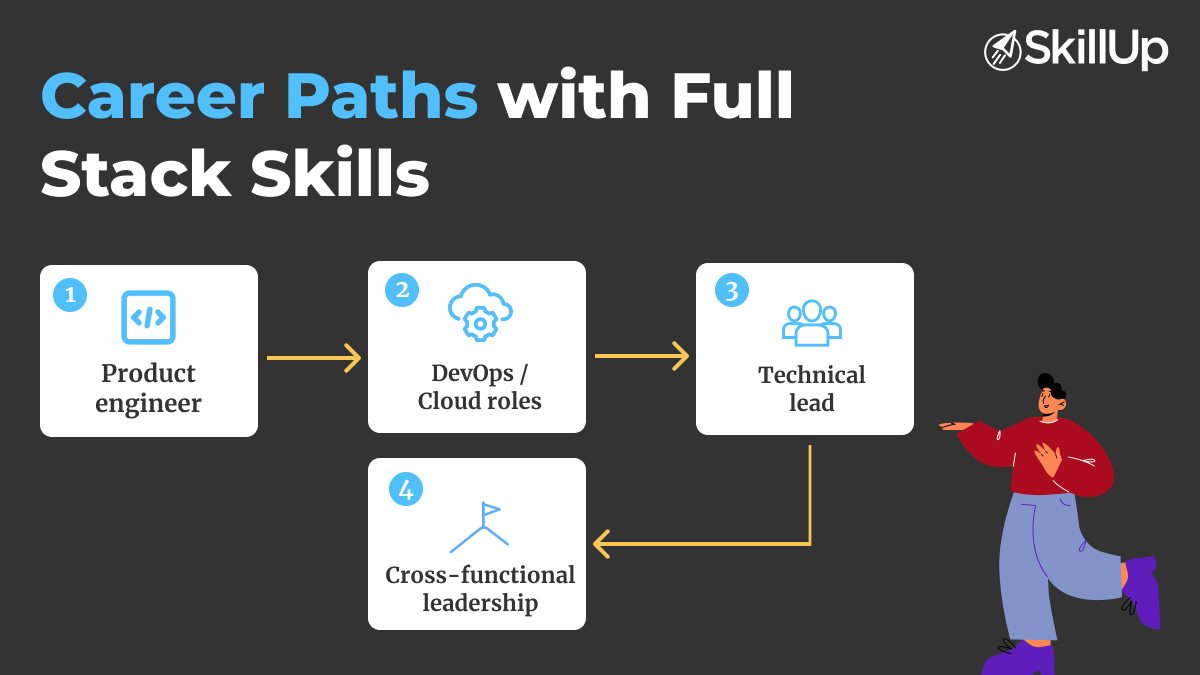
Think beyond traditional software jobs. Full stack proficiency positions you for-
- Technical Lead roles
- Product engineering
- DevOps/Infrastructure engineering
- Cloud architecture
- Cross functional team leadership
These are not side lanes, they are high impact career highways. Developers who master full stack are often first in line for promotions because they-
- Understand dependencies
- Communicate across teams
- Bridge technical and business conversations
- Influence architectural decisions
In other words – they lead.
5. Full Stack Skills Support Career Stability, Not Just Cool Tech
Job security is a real concern these days. Between economic shifts and company pivots; tech layoffs have made headlines. But here is a reality check-
Developers with multi-layer skills experience lower deployment risk than those with narrow niche expertise.
Why? Because companies hate bottlenecks! If one person can handle the end-to-end problems that person becomes strategic, not expendable. Full stack engineers are not just coders, they are problem solvers.
Full Stack Skills: The Shift From Coding to System Thinking
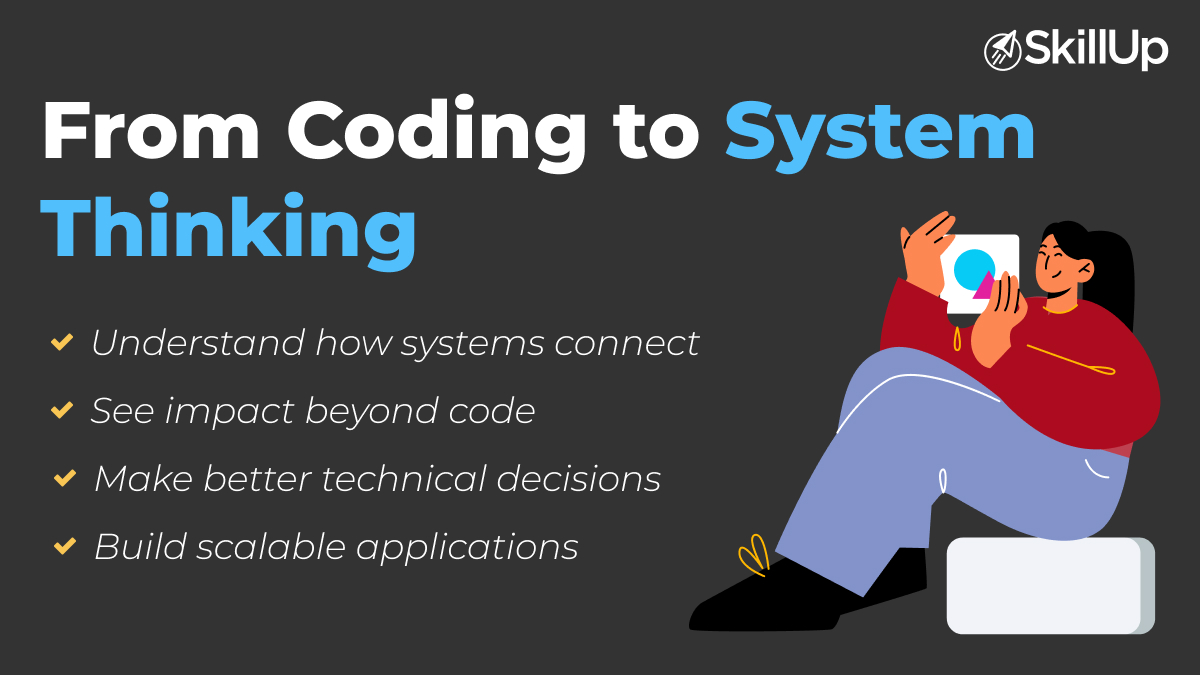
Full stack training does not just teach tools, it trains systems thinking. You start seeing-
- How data moves through applications
- How UI choices affect performance
- How infrastructure decisions impact user experience
- How architecture choices influence scalability
This shift, from tactical coding to strategic engineering, is the core of career power.
Full Stack Learning is Easier Than You Think!
You don’t have to juggle 10 languages overnight. Here is a simple roadmap:
- Strengthen Core Front-End: JavaScript / HTML / CSS
- Build Back-End Fluency: Node, Python, or similar
- Understand Databases: SQL & NoSQL
- Learn APIs: REST / GraphQL
- Get Comfortable With DevOps Basics: Git / Docker / CI/CD
- Explore Cloud Deployment: AWS / Google Cloud / Azure
Each step is according to your current skill set, no jumping into any unknown territory. Full stack is composable learning.
How AI is Supercharging Full Stack Development?
AI is not replacing developers; it is augmenting development workflows. Full stack engineers will increasingly-
- Integrate AI-powered services
- Build interfaces that consume AI data
- Optimize apps with predictive insights
- Use AI tools for coding assistance and testing
Developers who understand full stack plus how AI fits into apps will be the most sought after. And yes; that’s already happening.
Where Does This Fit in the Job Market?
Data shows that:
- Hiring trends show a clear preference for developers who can contribute across multiple layers of an application, especially in cloud-focused environments.
- The Metana 2026 Tech Jobs Report includes full-stack developers among the top in-demand roles alongside cloud, AI, DevOps and data jobs.
This is not a trend, it is a structural shift. Developers who align early will reap the long-term benefits.
Closing Thoughts: It’s Time to Amplify Your Career
Let’s bring it full circle. You have already worked hard to get where you are. You have earned your code fluency, logic mastery and problem-solving chops. Now it is time to expand your influence.
Full stack application engineering is not about dilution, it is about enhancement. It is not replacing your identity, it is elevating it. It gives you:
- Broader problem-solving reach
- Higher promotion readiness
- Stronger resume appeal
- Cross-team influence
- Long-term stability in changing markets
For developers who are tired of hitting ceilings and want to push into strategic and high impact roles, this is not just an upgrade, it is a turning point.
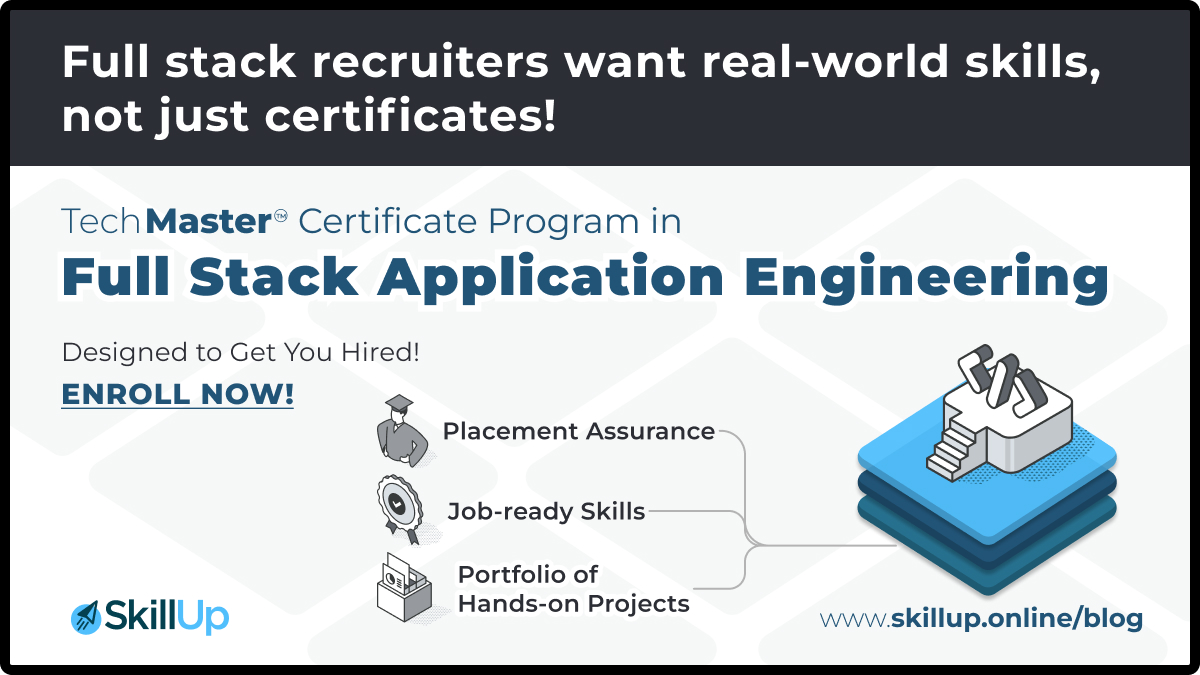
The next step? Focus on building practical, job-relevant skills through real projects and hands-on learning. That’s where the gap closes between knowing and delivering. TechMaster Certificate in Full Stack Application Engineering is designed around this exact need, helping developers build full stack capability in a structured, real-world way without the overwhelm.

SkillUp Online