Tech skills in 2026 are evolving rapidly, this blog explains what’s changing and how to stay relevant.
AI is already reshaping development, with many developers using or planning to use it, and most of the code now AI-generated, making adaptability essential for today’s professionals.
If you are feeling that pressure, you are not behind; you are aware.
Here is the reality: in 2026, job security in tech won’t belong to developers who know just one tool. It will belong to engineers who understand how systems connect; front end, back end, databases, deployment and everything in between. That is where Full Stack Application Engineering steps in.
This is not about collecting more skills just to look impressive on LinkedIn. It’s about building adaptability and being the person on the team who can step into gaps, connect moving parts and ship complete solutions.
If you want long-term employability, stronger leadership pathways and confidence when tech shifts again (because it will), full stack is not just an option, it is a strategy. Let’s break down why.
Why Full Stack Works So Well for Future Careers?
If all you know is React or just Python, you are locked into a vertical skillset. Full stack engineers, on the other hand, are horizontal thinkers – they can integrate systems, debug across multiple layers and deliver complete solutions.
Today, it might be React + Node. Tomorrow it might be Svelte + Go.
Tech Market Reality Check: Growth, Demand and Job Security
Let’s anchor this in real data
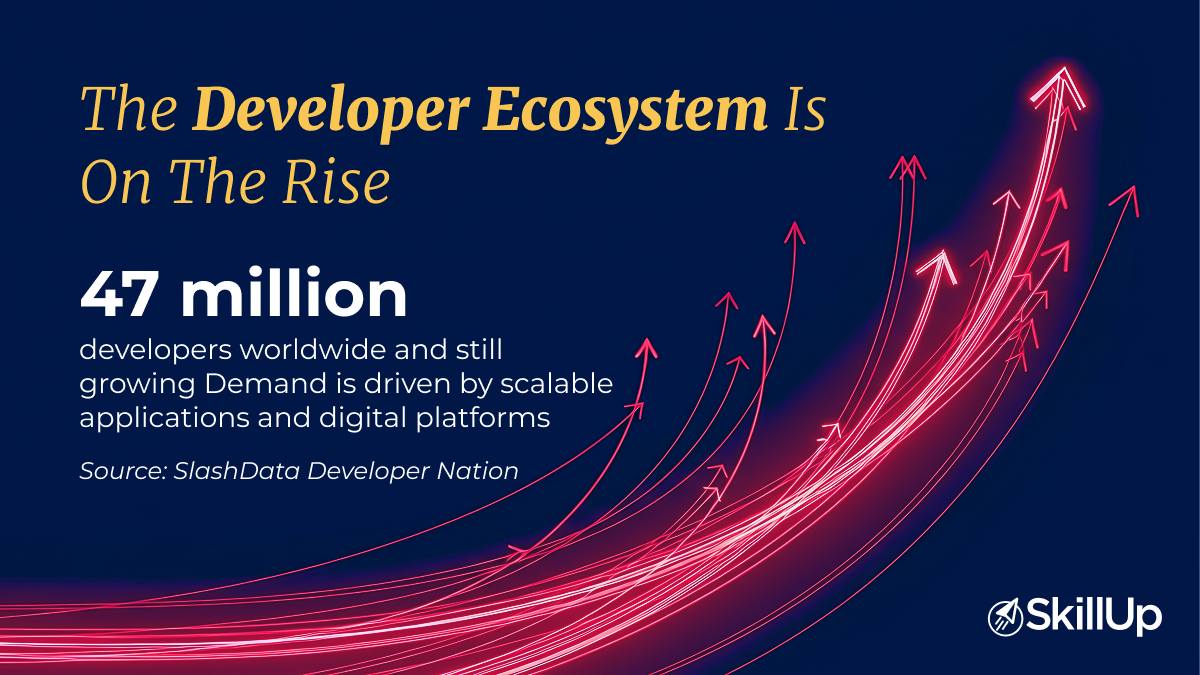
- According to SlashData’s Developer Nation research, the global developer population was estimated at over 47 million developers worldwide in early 2025 and is expected to grow more driven by demand for scalable applications and digital platforms.
That means more projects, more teams and more opportunities for those who can build end-to-end systems.
- Full stack development consistently ranks among the top in-demand software skills, with employers valuing the ability to integrate front-end and back-end systems over isolated specialties.
These are not predictions, this is the current trajectory.
Layoff Fear? Full Stack Skills Turn Anxiety into Opportunity
Let’s address the elephant in the room: layoffs in tech have been real and scary.
In 2023 alone, many tech roles were cut across major companies, from Meta to Amazon to Google. But here is the nuanced insight: the highest layoffs were in roles with narrow skill sets or legacy technologies. What did not take as big a hit?
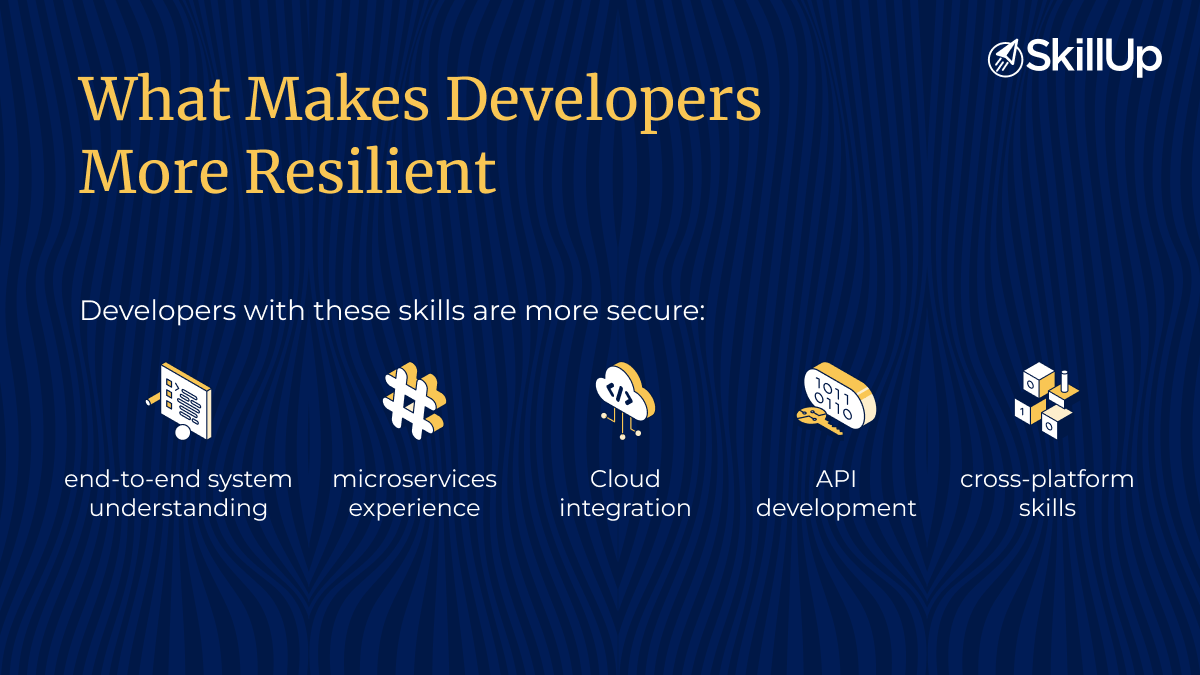
Developers with:
- End-to-end knowledge
- Experience with microservices
- Cloud integration skills
- API development expertise
- Cross-platform fluency
Why? Because those engineers are directly tied to product delivery, system integration and architectural decision making not just one piecemeal function. Full stack developers, by definition, play those roles. That is why Full Stack Application Engineering is less volatile and more resilient than single-layer specializations.
Future-Proof Your Career: Adaptability Is the Real Advantage
The world of tech careers is evolving fast:
- Monolithic apps → Distributed microservices
- On-prem servers → Cloud infrastructure
- Static pages → Dynamic, reactive user experiences
Full stack engineers speak all these languages, which means companies rely on them to steer change. Hiring managers don’t just want specialists, they want problem solvers, integrators and strategic thinkers. That is exactly what full stack engineers bring to the table.
Full Stack Skills Mean Bigger Projects and Bigger Impact
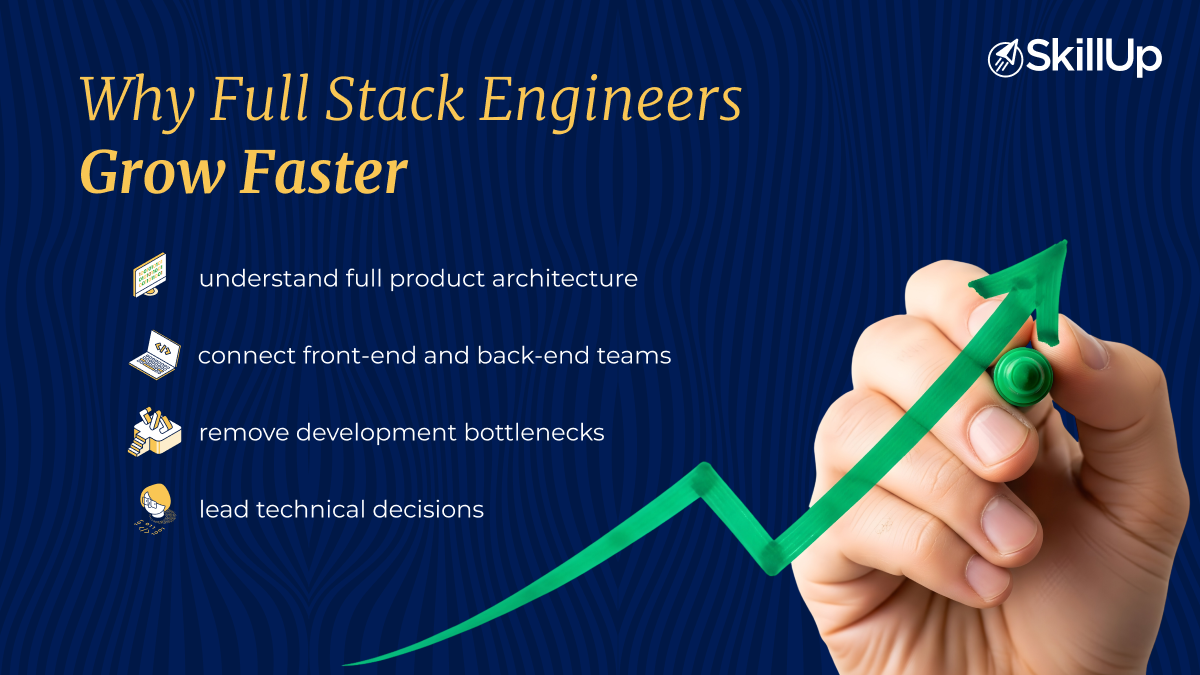
Let’s be clear: purpose matters. Tech pros who stick only to one layer often get pigeonholed. But full stack engineers are often next in line for leadership roles because they:
- Understand product architecture from UI to DB
- Can mentor diverse engineering teams
- Can coordinate between front-end and back-end teams
- Remove bottlenecks in development pipelines
In short: they are not just coders, they are technical leaders.
Full Stack Developers Are Innovation Drivers
Software innovation today is not siloed. Whether it is
- AI-enabled features
- Real-time collaboration systems
- Cross-platform mobile experiences, or
- API-driven ecosystems
They are all built by teams that think holistically.
Full stack engineers act as the connective layer, ensuring the front-end experience matches business logic and database design in a scalable way. They are rarely redundant because they create compatibility, not just components. That is why they are increasingly vital.
Full Stack is not Just for Startups, Enterprise Needs It Too
One misconception is that full stack skills are only relevant in startups or small teams. That is not true. Large enterprises are hungry for:
- Microservices architects
- Hybrid mobile developers
- Cloud-native engineers
- Full stack API integrators
- Tech leads with an end-to-end perspective
In fact, many enterprise digital transformation projects fail due to lack of integration expertise – precisely the area where full stack engineers thrive.
Career Mobility: From Developer to Tech Leader
Here’s where the real advantage lies. Full stack knowledge does not just broaden your role scope, it enhances your career trajectory. Many tech leads, project managers and CTO-level executives started as full stack engineers because-
- They understand the big picture
- They speak both client and server language
- They build cross functional bridges
- They lead product driven architecture decisions
You are not just a coder; you are a strategic contributor. That is the kind of career resilience that lasts.
How to Start Building Full Stack Skills?
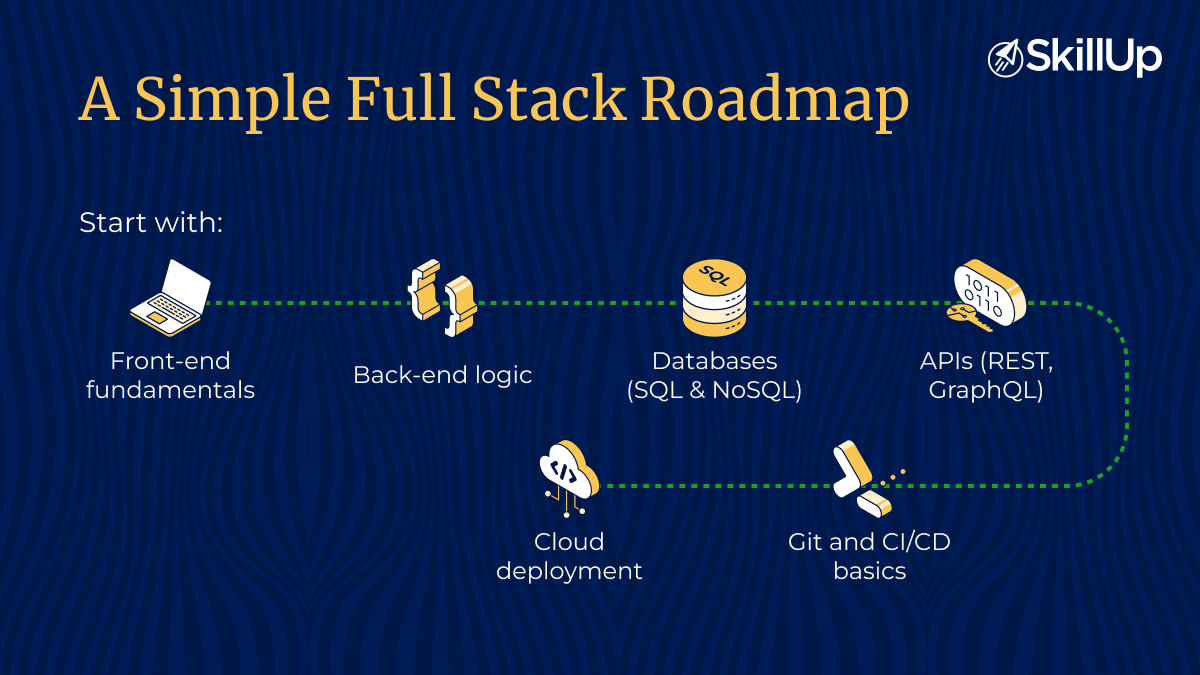
The key is not trying to learn everything at once. Here is a practical roadmap
- Master Front-End Fundamentals: HTML, CSS, JavaScript, Front-end frameworks like React
- Understand Back-end Logic: Node, Python, or any back-end stack
- Learn Databases: SQL & NoSQL basics
- Build APIs: REST, GraphQL
- Version Control & DevOps Basics: Git, CI/CD fundamentals
- Cloud Deployment Skills: Intro to AWS or GCP
Take it step by step but stay consistent. Even one small project per week adds up fast.
Final Thoughts: Your Career Strategy in 2026
Technology will keep evolving. Frameworks will change, and tools will come and go. But the developers who stay relevant are those who think beyond silos, professionals who understand systems end-to-end and can adapt across them.
That’s why full stack application engineering is more than just a technical upgrade; it is a long-term career strategy. It equips you with the flexibility to work across layers, collaborate effectively, and stay resilient in a shifting tech landscape.
For those looking to build these capabilities in a structured way, the TechMaster Certificate Program in Full Stack Application Engineering offers a practical, industry-relevant learning path. With a strong focus on real-world architecture, deployment, scalability, and hands-on projects, it helps professionals develop skills that go beyond theory and translate into real impact.
If future-proofing your career is the goal, building this kind of holistic expertise is a smart place to start.

SkillUp Online