Advanced Artificial Intelligence Course: Certification, Syllabus, Career Path & Skills (2026 Guide)
Artificial Intelligence (AI) is transforming industries, businesses, and careers by enabling machines to analyze data, automate processes, generate content, and make intelligent decisions. With the rapid growth of Generative AI, Large Language Models (LLMs), Machine Learning, and AI automation, organizations are actively looking for professionals who can build and implement AI-powered solutions.
An Advanced Artificial Intelligence Course helps learners develop the technical knowledge and practical skills required to design, develop, and deploy modern AI applications. Unlike beginner-level AI programs, an advanced AI course focuses on real-world implementation of Machine Learning, Deep Learning, Generative AI, Natural Language Processing (NLP), Computer Vision, and AI engineering concepts.
Professionals searching for an advanced AI course online can gain expertise in emerging AI technologies while preparing for high-demand roles such as AI Engineer, Machine Learning Engineer, Data Scientist, NLP Engineer, and Generative AI Specialist.
This complete guide explains what an Advanced Artificial Intelligence Course covers, who should enroll, skills you will learn, career opportunities, salary potential, certification benefits, and how to choose the best advanced AI course in 2026.
SkillUp Online offers industry-focused Artificial Intelligence programs designed to help learners build practical AI skills through structured learning, expert guidance, and real-world projects. Explore the complete Artificial Intelligence Courses and Programs to understand available learning paths.
What Is an Advanced Artificial Intelligence Course?
An Advanced Artificial Intelligence Course is a professional learning program designed to teach advanced AI concepts, technologies, and practical implementation techniques required to build intelligent systems.
While basic AI courses introduce fundamental concepts, an advanced AI course focuses on developing industry-ready skills in Machine Learning, Deep Learning, Neural Networks, Generative AI, Large Language Models, AI Agents, and Machine Learning Operations (MLOps).
The objective of an advanced artificial intelligence course online is to help learners move from understanding AI concepts to creating real-world AI solutions used across industries such as healthcare, finance, education, manufacturing, retail, and technology.
Quick Answer: What Is an Advanced Artificial Intelligence Course?
An Advanced Artificial Intelligence Course is a specialized training program that teaches advanced AI technologies including Machine Learning, Deep Learning, Generative AI, LLMs, and AI deployment. It prepares learners for professional AI careers by combining theoretical knowledge with practical projects and industry applications.
Definition and Learning Objectives
The main objective of an AI certification course is to help learners develop the ability to understand, build, and deploy Artificial Intelligence systems for real-world applications.
A professional AI course focuses on both technical foundations and practical implementation. Learners understand how AI models are created, trained, tested, optimized, and integrated into business solutions.
The key learning objectives of an advanced AI certification program include:
| Learning Area | Skills Developed |
|---|---|
| Machine Learning | Building predictive models, classification, regression, clustering, and data-driven decision systems. |
| Deep Learning | Understanding neural networks, advanced architectures, and AI model training techniques. |
| Generative AI | Creating AI applications using foundation models, LLMs, and generative technologies. |
| Natural Language Processing | Developing language-based AI applications such as chatbots and intelligent search systems. |
| AI Deployment | Deploying, monitoring, and managing AI models using MLOps practices. |
Learners who want to build deeper expertise in AI engineering can explore SkillUp Online
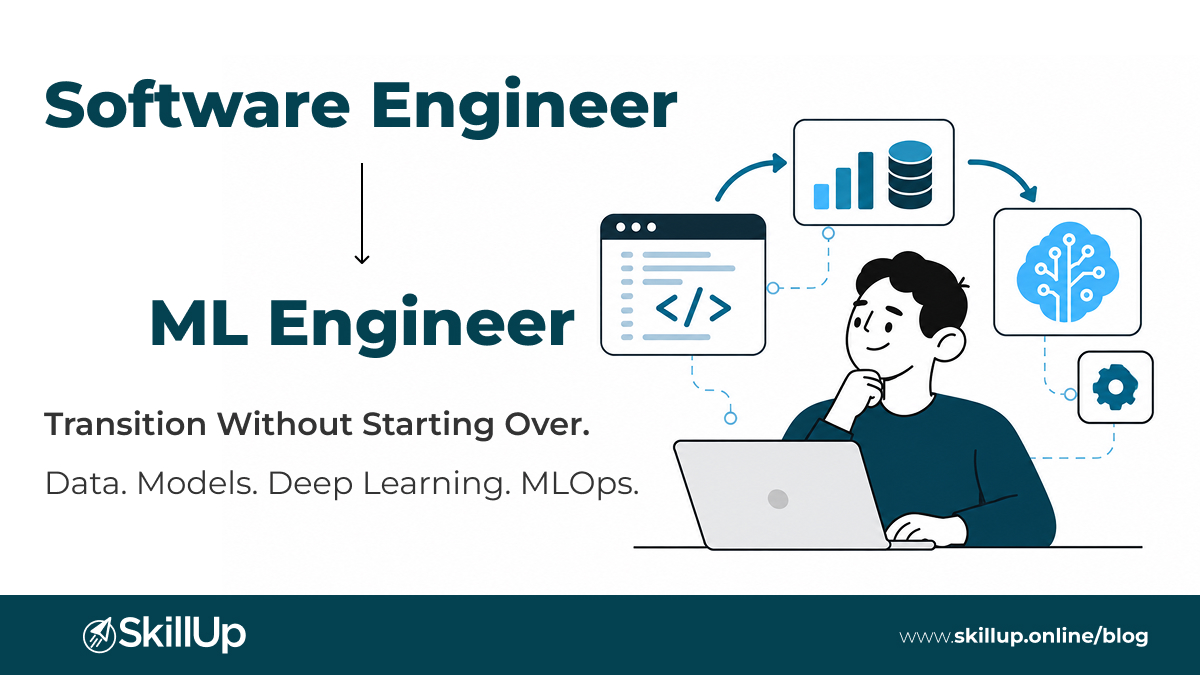
AI and ML Engineering TechMaster Program
, which focuses on practical Artificial Intelligence and Machine Learning skills.
Who Should Enroll in an Advanced Artificial Intelligence Course?
An Advanced Artificial Intelligence Course is suitable for students, professionals, developers, analysts, and technology enthusiasts who want to build future-ready AI skills.
The course is especially valuable for:
| Learner Profile | How AI Training Helps |
|---|---|
| Software Developers | Learn AI development, machine learning models, and AI-powered application building. |
| Data Analysts | Upgrade skills in predictive analytics, machine learning, and AI-driven insights. |
| Engineering Graduates | Build technical skills required for AI engineering and machine learning careers. |
| Working Professionals | Transition into AI roles with flexible professional AI courses. |
| Business Professionals | Understand AI applications for automation and business transformation. |
A professional AI course is also suitable for individuals planning an AI career transition and looking for structured learning with practical projects.
Beginner vs Intermediate vs Advanced AI Courses
Choosing the right AI learning path depends on your current technical knowledge and career objectives. AI courses are generally divided into beginner, intermediate, and advanced levels.
| Course Level | Main Focus | Suitable For |
|---|---|---|
| Beginner AI Course | Introduction to Artificial Intelligence, basic concepts, AI applications, and fundamental terminology. | Students, beginners, and professionals starting their AI journey. |
| Intermediate AI Course | Python programming, data analysis, machine learning algorithms, and basic AI projects. | Developers, analysts, and learners with technical backgrounds. |
| Advanced Artificial Intelligence Course | Deep Learning, Generative AI, LLMs, AI agents, advanced machine learning, and AI deployment. | Professionals preparing for AI Engineer and Machine Learning careers. |
Why Learn Advanced Artificial Intelligence in 2026?
Artificial Intelligence has become one of the fastest-growing technology fields, creating new opportunities for professionals across industries. Businesses are investing heavily in AI solutions to improve productivity, automate workflows, and develop innovative products.
Learning through an Advanced Artificial Intelligence Course helps professionals gain the skills required to work with modern AI technologies and prepare for future career opportunities.
Why Is Advanced AI Important in 2026?
Advanced AI skills are becoming essential because companies need professionals who can develop, implement, and manage AI-powered solutions using technologies such as Generative AI, Machine Learning, and Large Language Models.
AI Industry Growth
The adoption of Artificial Intelligence is increasing rapidly due to advancements in computing power, cloud platforms, data availability, and AI models.
Technologies such as Generative AI, AI assistants, autonomous systems, and intelligent automation are changing how organizations operate.
This growth has increased demand for professionals who understand both AI theory and practical implementation. An advanced artificial intelligence course online provides learners with the skills required to participate in this growing technology ecosystem.
Demand Across Industries
Artificial Intelligence is no longer limited to technology companies. Organizations across multiple industries are adopting AI to improve efficiency and create better customer experiences.
| Industry | AI Applications |
|---|---|
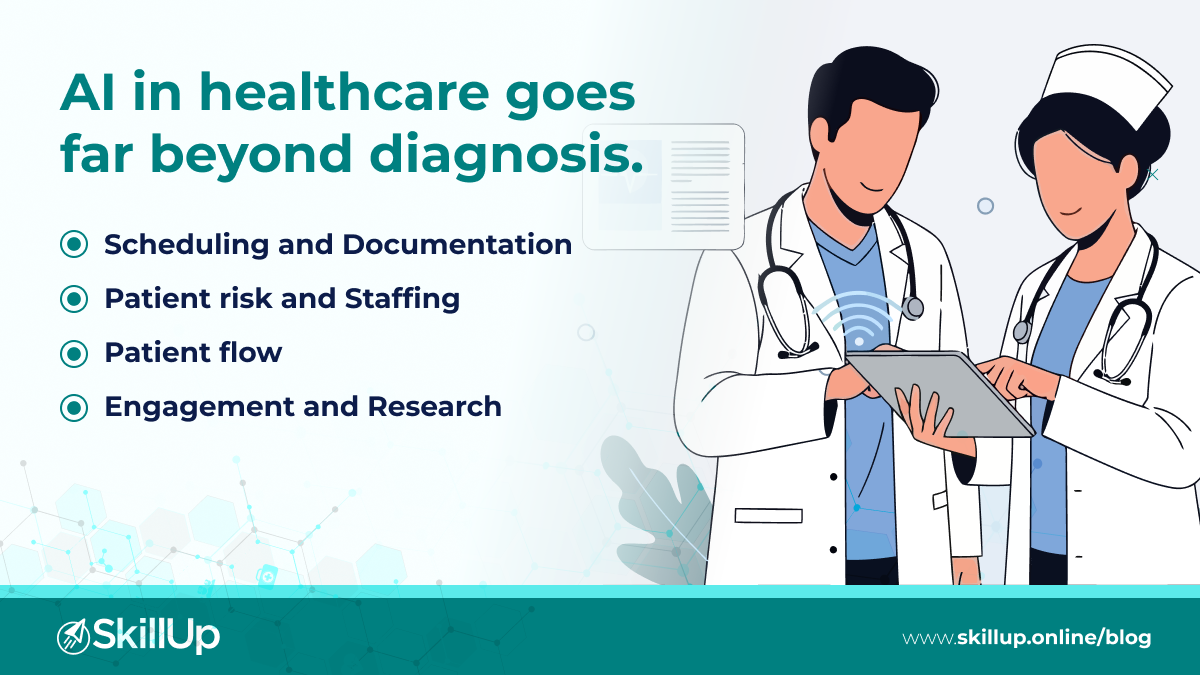
| Healthcare | AI diagnosis support, medical analysis, healthcare automation, and research. |
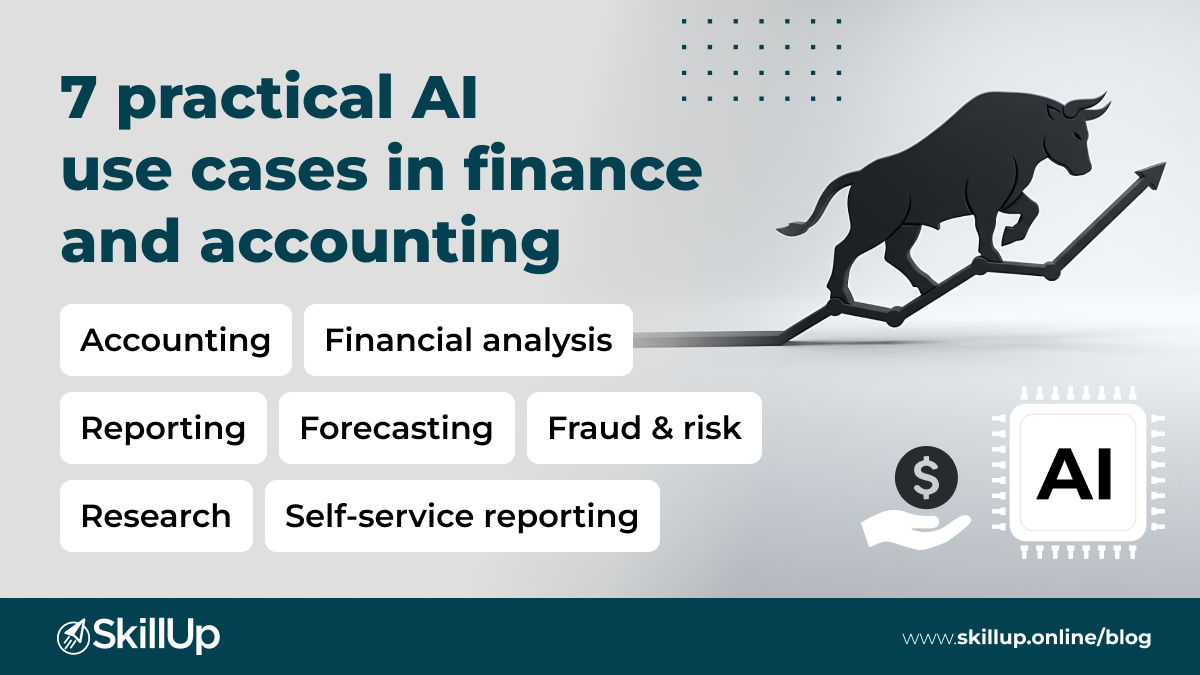
| Finance | Fraud detection, risk analysis, financial forecasting, and automation. |
| E-commerce | Recommendation systems, personalization, customer support chatbots. |
| Manufacturing | Predictive maintenance, robotics, quality control, smart factories. |
| Education | AI learning platforms, personalized education, intelligent tutoring. |
Future Career Opportunities
The demand for AI professionals is expected to continue growing as companies require experts who can build and manage intelligent systems.
After completing an AI career course, professionals can explore roles such as:
- AI Engineer
- Machine Learning Engineer
- Data Scientist
- Generative AI Engineer
- NLP Engineer
- Computer Vision Engineer
- AI Consultant
- AI Product Manager
Professionals looking for a complete AI and data science career pathway can explore SkillUp’s
Data Science and Artificial Intelligence TechMasters Program
to develop advanced skills required for modern AI roles.
Skills You Will Learn in an Advanced AI Course
A high-quality Advanced Artificial Intelligence Course focuses on developing practical skills required to build, deploy, and manage modern AI solutions. Today’s AI professionals need expertise across multiple domains, including Machine Learning, Deep Learning, Generative AI, Large Language Models, automation, and AI deployment.
A professional AI course combines theoretical concepts with hands-on implementation so learners can solve real-world business problems using Artificial Intelligence technologies.
Quick Answer: What Skills Do You Learn in an Advanced AI Course?
An Advanced Artificial Intelligence Course teaches Machine Learning, Deep Learning, Neural Networks, Generative AI, Large Language Models (LLMs), Prompt Engineering, Computer Vision, Natural Language Processing, AI Agents, and MLOps skills required for modern AI engineering roles.
Machine Learning
Machine Learning is the foundation of Artificial Intelligence that enables systems to learn from data, identify patterns, and make predictions without manual programming.
In an advanced artificial intelligence course, learners understand how to create, train, evaluate, and optimize machine learning models for practical applications.
Key Machine Learning concepts include:
| Machine Learning Skill | Application |
|---|---|
| Supervised Learning | Used for prediction, classification, and decision-making systems. |
| Unsupervised Learning | Used for finding hidden patterns and customer segmentation. |
| Regression Models | Used for forecasting and predictive analytics. |
| Classification Algorithms | Used for fraud detection, recommendations, and automation. |
| Model Evaluation | Used to measure and improve AI model performance. |
Deep Learning
Deep Learning is an advanced branch of Machine Learning that uses artificial neural networks to solve complex problems involving large amounts of data.
A strong AI engineer course includes Deep Learning because it powers many modern applications such as image recognition, speech processing, autonomous systems, and Generative AI.
Learners develop knowledge of:
- Deep Neural Networks
- Convolutional Neural Networks (CNNs)
- Recurrent Neural Networks (RNNs)
- Transformer-based architectures
- Deep Learning model optimization
Neural Networks
Neural Networks are computing models inspired by the human brain that allow AI systems to process information, identify patterns, and make intelligent decisions.
An advanced AI course teaches how neural networks work and how they are applied in real-world Artificial Intelligence solutions.
Important neural network concepts include:
- Artificial Neural Networks (ANN)
- Layers and neurons
- Activation functions
- Backpropagation
- Optimization techniques
Generative AI
Generative AI is one of the most important areas covered in modern Artificial Intelligence training. It enables AI systems to create text, images, code, audio, and other types of digital content.
A Generative AI course helps learners understand how foundation models and advanced AI systems are developed and applied in businesses.
Generative AI topics include:
| Generative AI Topic | Learning Outcome |
|---|---|
| Foundation Models | Understanding large-scale AI models used for content generation. |
| Large Language Models | Building applications using modern language-based AI systems. |
| AI Assistants | Creating intelligent conversational applications. |
| AI Automation | Using AI to automate business workflows. |
Professionals who want to specialize in Generative AI can explore SkillUp’s
TechMaster AI and ML Engineering Program
to develop practical AI engineering skills.
Large Language Models (LLMs)
Large Language Models are advanced AI models capable of understanding and generating human-like text. They power modern AI applications such as chatbots, AI assistants, search systems, and enterprise automation platforms.
An advanced artificial intelligence course introduces learners to:
- Transformer architecture
- LLM training concepts
- Prompt-based AI interaction
- Retrieval-Augmented Generation (RAG)
- AI-powered knowledge systems
- Enterprise LLM applications
Prompt Engineering
Prompt Engineering is the process of designing effective instructions that guide AI models to generate accurate and useful responses.
As Generative AI adoption increases, prompt engineering has become an important skill for AI engineers, developers, marketers, analysts, and business professionals.
Learners understand:
- Prompt design techniques
- Role-based prompting
- Few-shot and zero-shot prompting
- AI output optimization
- Business use cases of prompting
Computer Vision
Computer Vision enables Artificial Intelligence systems to understand images, videos, and visual information. It is widely used in healthcare, manufacturing, security, retail, and autonomous technology.
An advanced AI certification course covers:
- Image classification
- Object detection
- Image recognition
- Visual data processing
- Computer Vision models
Natural Language Processing (NLP)
Natural Language Processing enables machines to understand, analyze, and generate human language.
NLP is used in AI chatbots, voice assistants, translation systems, search engines, and document analysis platforms.
NLP skills covered include:
- Text processing
- Sentiment analysis
- Language understanding
- Text generation
- Conversational AI
AI Agents & Automation
AI Agents represent the next generation of Artificial Intelligence by allowing systems to perform tasks, make decisions, and interact with different tools automatically.
Modern AI training programs teach learners how AI agents can improve business productivity through intelligent automation.
Topics include:
- AI agent architecture
- Autonomous workflows
- Tool integration
- Business process automation
- Intelligent decision systems
Model Deployment (MLOps)
Developing an AI model is only one part of Artificial Intelligence development. Organizations need professionals who can deploy, monitor, and maintain AI models in production environments.
MLOps combines Machine Learning, software engineering, and operations practices to manage AI systems effectively.
Learners gain knowledge of:
- AI model deployment
- Model monitoring
- Version control
- Cloud-based AI deployment
- AI performance optimization
Advanced Artificial Intelligence Course Syllabus
The syllabus of an Advanced Artificial Intelligence Course is designed to provide complete knowledge of AI concepts, programming, algorithms, tools, and practical implementation.
A complete AI certification program should include both technical foundations and project-based learning to prepare learners for industry roles.
AI Foundations
This module introduces the fundamentals of Artificial Intelligence and explains how intelligent systems solve problems.
Topics include:
- History and evolution of AI
- Types of Artificial Intelligence
- AI applications across industries
- AI ethics and responsible AI
- AI problem-solving approaches
Python for AI
Python is the most widely used programming language for Artificial Intelligence development because of its powerful libraries and frameworks.
The Python module covers:
- Python programming fundamentals
- Data structures and functions
- NumPy
- Pandas
- Data visualization
- AI development libraries
Statistics & Mathematics
Mathematics and statistics provide the foundation required to understand how AI models learn from data.
Learners study:
- Linear algebra
- Probability
- Statistics
- Optimization techniques
- Data analysis methods
Machine Learning Algorithms
This module teaches how different algorithms are used to solve business and technical problems.
Topics include:
- Regression algorithms
- Classification techniques
- Clustering methods
- Decision trees
- Model evaluation
Deep Learning with TensorFlow & PyTorch
TensorFlow and PyTorch are leading frameworks used for developing advanced AI applications.
Learners gain practical knowledge of:
- Neural network development
- Deep Learning workflows
- TensorFlow implementation
- PyTorch development
- AI model optimization
Generative AI Applications
This module focuses on developing practical Generative AI solutions using modern AI models.
Learners explore:
- AI chatbots
- LLM applications
- AI assistants
- Prompt engineering workflows
- AI automation solutions
Building AI Projects
Hands-on projects allow learners to apply AI concepts and develop practical experience.
Example projects include:
- AI chatbot development
- Recommendation systems
- Predictive analytics models
- Image recognition applications
- AI automation workflows
Capstone Project
The capstone project is the final stage where learners build an end-to-end AI solution by combining Machine Learning, Deep Learning, Generative AI, and deployment skills.
A strong capstone project helps learners demonstrate practical abilities and build a professional portfolio for AI career opportunities.
Career Opportunities After Completing an Advanced Artificial Intelligence Course
Completing an Advanced Artificial Intelligence Course can help professionals build the technical expertise required for some of the fastest-growing technology careers. As organizations continue adopting Machine Learning, Generative AI, and automation solutions, the demand for skilled AI professionals is increasing across industries.
A professional AI course helps learners develop practical skills required for roles such as AI Engineer, Machine Learning Engineer, Data Scientist, NLP Engineer, Computer Vision Engineer, and AI Consultant.
Quick Answer: What Careers Can You Get After an Advanced AI Course?
After completing an Advanced Artificial Intelligence Course, learners can pursue careers in AI engineering, machine learning, data science, Generative AI development, NLP, computer vision, AI consulting, and AI product management depending on their skills and experience.
AI Engineer
An AI Engineer develops Artificial Intelligence applications by combining programming, Machine Learning, Deep Learning, and AI model deployment skills.
AI Engineers build intelligent systems such as recommendation engines, AI assistants, automation platforms, and enterprise AI solutions.
| AI Engineer Skills | Applications |
|---|---|
| Machine Learning | Building predictive and intelligent models. |
| Deep Learning | Creating advanced AI systems using neural networks. |
| Generative AI | Developing AI assistants and content generation applications. |
| MLOps | Deploying and maintaining AI solutions. |
Machine Learning Engineer
Machine Learning Engineers specialize in designing, training, and optimizing machine learning models that solve real-world problems.
They work with large datasets, develop algorithms, improve model accuracy, and deploy machine learning systems into production environments.
Professionals interested in becoming Machine Learning Engineers can benefit from an advanced AI certification program focused on practical implementation.
Data Scientist
Data Scientists use Artificial Intelligence, statistics, programming, and analytics to extract meaningful insights from data.
An Advanced Artificial Intelligence Course helps aspiring Data Scientists understand predictive modeling, machine learning algorithms, data analysis, and AI-driven decision-making.
Data Scientist responsibilities include:
- Analyzing complex datasets
- Building predictive models
- Creating data-driven strategies
- Applying Machine Learning techniques
- Developing AI-powered solutions
Learners interested in combining Artificial Intelligence and Data Science can explore SkillUp’s
Data Science and Artificial Intelligence TechMasters Program
for advanced career-focused learning.
NLP Engineer
Natural Language Processing Engineers build AI systems that allow computers to understand, analyze, and generate human language.
NLP Engineers work on applications including chatbots, AI search systems, voice assistants, translation tools, and document intelligence solutions.
Important NLP skills include:
- Natural Language Processing concepts
- Large Language Models (LLMs)
- Text analytics
- Conversational AI development
- Language model optimization
Computer Vision Engineer
Computer Vision Engineers develop AI systems that enable machines to understand images and videos.
These professionals work in industries such as healthcare, manufacturing, security, robotics, and autonomous technology.
Computer Vision applications include:
- Image classification
- Object detection
- Facial recognition systems
- Medical image analysis
- Visual automation
Prompt Engineer
A Prompt Engineer creates effective instructions that help Generative AI models produce accurate and useful outputs.
With the increasing adoption of Generative AI tools, prompt engineering has become an important skill for professionals working with AI applications.
AI Consultant
AI Consultants help businesses identify opportunities where Artificial Intelligence can improve operations, automate workflows, and create new digital solutions.
They combine technical AI knowledge with business understanding to recommend and implement AI strategies.
AI Product Manager
AI Product Managers oversee the development of AI-powered products by connecting business requirements, customer needs, and technical AI capabilities.
They collaborate with engineers, data scientists, and business teams to successfully deliver AI products.
Salary After an Advanced Artificial Intelligence Course
The salary after completing an Advanced Artificial Intelligence Course depends on several factors including technical skills, professional experience, location, industry, and specialization.
Professionals with expertise in Machine Learning, Generative AI, Large Language Models, and AI engineering are currently in demand across technology-driven organizations.
Entry-Level Salaries
Entry-level professionals who complete an AI certification course and build practical project experience can begin careers as AI Engineers, Junior Machine Learning Engineers, or Data Analysts.
Entry-level AI professionals usually work on:
- Data preparation
- Model training support
- AI application development
- Machine Learning implementation
Mid-Level Professionals
Professionals with experience and advanced AI skills can move into specialized roles involving AI development, model optimization, and enterprise implementation.
Common mid-level roles include:
- Machine Learning Engineer
- AI Engineer
- Data Scientist
- Generative AI Specialist
Senior AI Roles
Senior AI professionals design AI strategies, manage complex projects, and lead Artificial Intelligence implementation at an organizational level.
Senior roles include:
- AI Architect
- Lead AI Engineer
- AI Research Scientist
- AI Solutions Consultant
Global Salary Trends
Artificial Intelligence professionals have opportunities across global technology markets. Continuous learning, project experience, and specialization in areas such as Generative AI and LLM applications can improve long-term career growth.
How to Choose the Best Advanced Artificial Intelligence Course
Choosing the best advanced AI course requires evaluating curriculum quality, practical exposure, mentorship, certification value, and career support.
Accreditation
A reliable AI certification program should provide structured learning aligned with current industry requirements and emerging AI technologies.
Industry Projects
Projects are essential for developing practical AI skills. Look for courses that include real-world applications involving Machine Learning, Generative AI, automation, and AI development.
Mentorship
Expert guidance helps learners understand practical challenges and apply AI concepts effectively.
Placement Support
Career-focused AI training should include interview preparation, resume guidance, portfolio development, and career assistance.
Certification Value
A recognized AI certification course can strengthen your professional profile and demonstrate your Artificial Intelligence skills to employers.
Flexible Learning Options
Online AI programs provide flexibility for students and working professionals who want to upgrade their skills without leaving their current responsibilities.
Online vs Offline AI Courses
Both online and offline AI courses provide learning opportunities, but the right choice depends on your schedule, learning preference, and career goals.
| Learning Format | Benefits |
|---|---|
| Online AI Course | Flexible schedule, access from anywhere, suitable for working professionals. |
| Classroom AI Training | Direct interaction, structured environment, and networking opportunities. |
| Hybrid AI Learning | Combination of online flexibility and instructor guidance. |
AI Tools Covered During Training
A modern Advanced Artificial Intelligence Course introduces learners to industry-standard tools used by AI engineers and developers.
| AI Tool | Purpose |
|---|---|
| Python | Programming language widely used for AI and Machine Learning development. |
| TensorFlow | Deep Learning framework for building AI models. |
| PyTorch | Framework used for AI research and application development. |
| Hugging Face | Platform for NLP and Generative AI models. |
| OpenAI APIs | Integration of advanced AI capabilities into applications. |
| LangChain | Framework for building LLM-powered applications. |
| Vector Databases | Used for AI search and Retrieval-Augmented Generation systems. |
| GitHub | Code management and AI project collaboration. |
Real-World AI Projects You Can Build
Practical projects help learners apply AI concepts and create portfolios that demonstrate their technical abilities.
Chatbots
Build intelligent conversational AI systems using Natural Language Processing and Large Language Models.
Recommendation Systems
Create AI-powered recommendation engines used in e-commerce and digital platforms.
Image Classification
Develop computer vision models that identify and classify images.
Fraud Detection
Build machine learning systems that detect unusual patterns and financial risks.
Predictive Analytics
Create AI models that analyze historical data and predict future outcomes.
AI Automation Workflows
Develop intelligent automation solutions that improve productivity and reduce repetitive tasks.
Certification and Course Completion Benefits
Completing an AI certification program provides multiple benefits, including skill validation, portfolio development, and improved career opportunities.
Industry Recognition
A professional certification demonstrates your commitment to developing advanced Artificial Intelligence skills.
Portfolio Development
Hands-on AI projects help learners create a strong portfolio for employers and career opportunities.
Resume Enhancement
AI certifications and practical experience improve your professional profile.
Interview Preparation
Advanced AI training helps learners prepare for technical interviews and demonstrate practical knowledge.
Frequently Asked Questions
Is an Advanced Artificial Intelligence Course worth it?
Yes. An Advanced Artificial Intelligence Course is valuable for professionals who want to build skills in Machine Learning, Generative AI, LLMs, and AI engineering.
Do I need coding experience?
Basic programming knowledge is helpful, but learners can develop coding skills while progressing through a structured AI course.
Which programming language is required?
Python is the most widely used programming language for Artificial Intelligence and Machine Learning development.
Can beginners join an advanced AI course?
Beginners can join if they are willing to learn programming, mathematics, and AI fundamentals.
How long does it take to complete?
The duration depends on the course structure, learning format, and depth of topics covered.
What jobs can I get after certification?
Learners can pursue careers as AI Engineers, Machine Learning Engineers, Data Scientists, NLP Engineers, and AI Consultants.
What salary can I expect?
Salary depends on experience, skills, location, and specialization. AI professionals with practical expertise generally have strong career opportunities.
Is online certification accepted by employers?
Yes. Employers value online certifications when they include practical projects and demonstrate real technical skills.
Why Choose SkillUp Online for Your Advanced Artificial Intelligence Course
SkillUp Online provides industry-focused learning programs designed to help professionals develop practical Artificial Intelligence and Machine Learning expertise.
Industry-Aligned Curriculum
The curriculum focuses on current AI technologies including Machine Learning, Generative AI, and AI engineering practices.
Live Expert Mentors
Learners receive guidance from experienced professionals who understand real-world AI implementation.
Hands-On Projects
Practical projects help learners build confidence and create a professional AI portfolio.
Career Support
Career guidance helps learners prepare for AI roles and professional opportunities.
Flexible Online Learning
Flexible learning options make AI education accessible for students and working professionals.
Recognized Certification
SkillUp certification validates your AI learning journey and technical capabilities.
Explore SkillUp AI programs:
Artificial Intelligence Courses and Programs
TechMaster AI and ML Engineering Program
Data Science and Artificial Intelligence TechMasters Program
TechMaster Programs
Build future-ready skills with an Advanced Artificial Intelligence Course and prepare for the next generation of AI career opportunities.

Manager at SkillUp Online
Cybersecurity expert also training and mentoring on Datascience and Artificial Intelligence.
Artificial Intelligence
Data Science
Cyber Security – Major
Database – SQL